‘Cinco pizzas por favor.’
When I was a kid, or so my grandfather always reminds us, my brother & I would chuck full garbage bags against the garage door of his cottage and say that our utmost ambition in life was to become garbagemen. And to this day, I’m strongly considering a career in waste management. If the human race could only figure out how to transform junk into energy, the way I transform junk-food into cycling energy, there wouldn’t be a single dump left on earth.
I wash down my five pizzas with six beer bottles refilled with coconut water and a glass of sugarcane juice and close up shop by chucking three butter cookies into my mouth for good measure. Then, I look up.
Everyone is looking at me.
‘¿Qué pasó?’
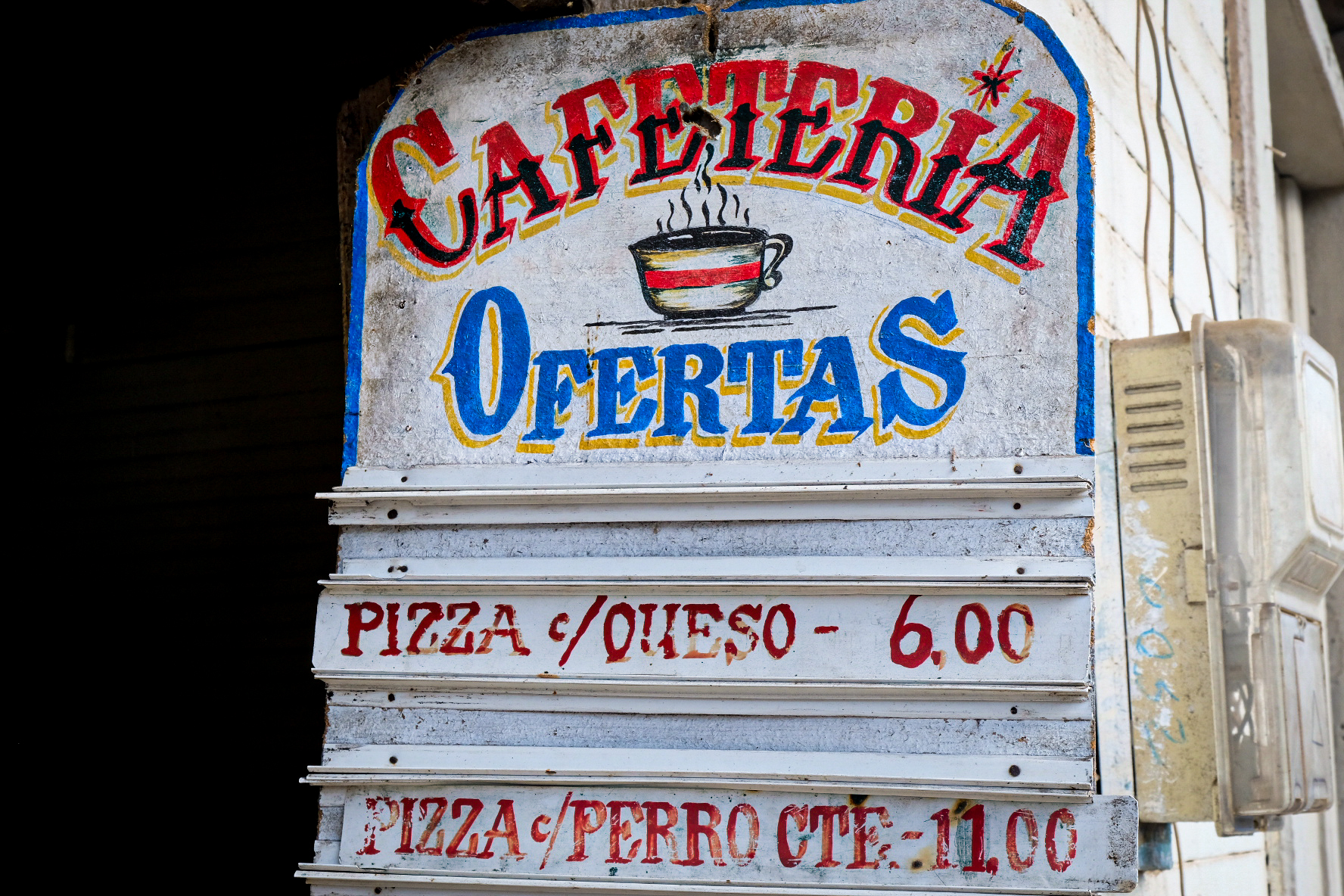
On an easy cycling day, we burn about 5-6,000 calories. It’s hardly my fault they make pizzas with spongy pancake dough, fresh cheese melted to perfection on a sweet and salty tomato paste base and sell them on the side of the road.
I look at Ceci who is laughing in disbelief. She burns about the same, give or take a few calories (burned by my sheer good looks), but somehow she eats about half what I eat. I squint at her. Is she making fun of me? I can’t tell. I turn to look at the lady whose food stall holds more wonders than a day at Disney Land. Then, I look back at Ceci. Or… is she perhaps thinking what I am thinking?
I raise two fingers. Ceci nods.
‘Dos Pancon Queso por favor.’


Ah the Pancon!
Cuba’s most under-celebrated national dish. I must admit it took us a while to truly appreciate what a good Pancon (I.e. Breadwith) can do for you. However, by this point in the trip, we’ve found ourselves starved and delirious enough times to recognize a Pancon menu from a mile away.
This is how the game is played:
First, your eyes undress the menu from top to bottom.
Refresco, Café, Pancon Queso, Pancon Jamon, Pancon Perro, Flan.
It’s a varied menu, but don’t get distracted by the frills.
Second, you mouth the words Pancon Queso (Breadwith Cheese).
Third, if the first Pancon proves worthy, you flick three fingers in a sideways arc like a nonchalant gambler at a blackjack table. Now you’ve got yourself a meal! And although it’s best consumed warmed in a panini-press, there are many other civilized ways to enjoy your Pancon. My personal favourite? Pressed in an unplugged panini-press. The fresh salty squeaky cheese and the elasticity of the bread can satisfy an empty cyclist to no end. You’ll have to take my word for it.
It’s usually 8am when we stop for our first Pancon, for second-breakfast. First-breakfast is easily Cuba’s most reliable meal. Served straight in your Casa Particular, it always includes fresh, muscular coffee, diced fruit, eggs and bread, and it’s ready at the hour you want and always costs the exact same. The coffee is the coup de grâce. It’s sooo good and we drink so much of it, that the first few hours on the bike feel like a woozy hypotension bad-trip, wherein you find yourself riding in ultra slow-motion while the world drifts by at hyper-speed. By the time we reach the point of almost passing out, that’s when the Pancon menus start talking to us. Making us offers we can’t refuse.
The thing is, by this point we’re running out of money by the kilometre. In fact, the bikes we’re riding are pretty much the only thing we own. (Act now, to get an earlybird price!) So whether we actually pass out or not is highly irrelevant. Not a single drop of coffee or crumb of bread gets left behind. Not on our watch!

After second-breakfast, we saddle our cycle-abodes once more, press play on our audiobooks and return to our ongoing avoid-the-road-apple challenge. We’re both losing by the way. By the time the day’s over, a skin analysis would reveal a 70% salt composition with 23% horse-poo, and 7% solidified petroleum particles.
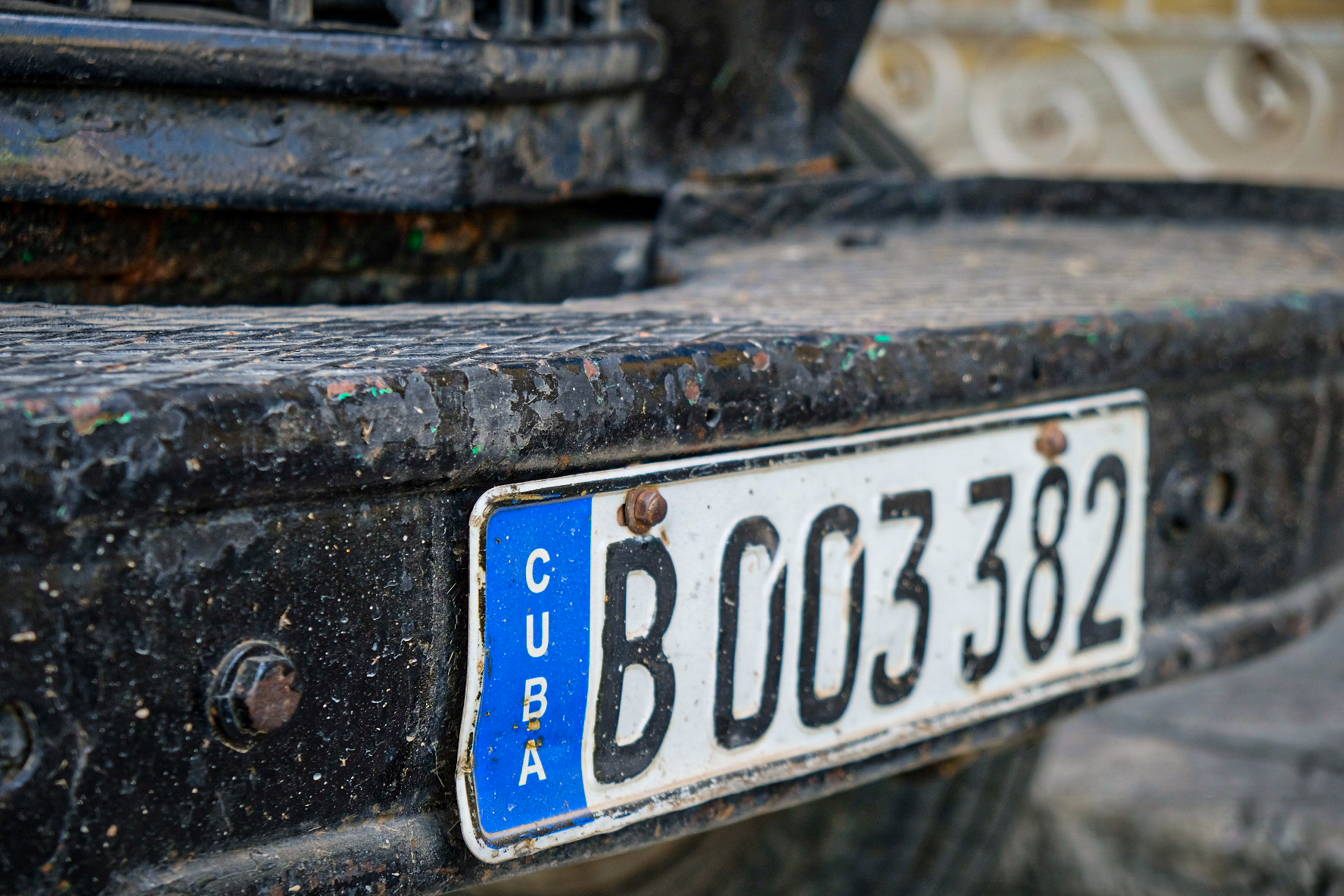
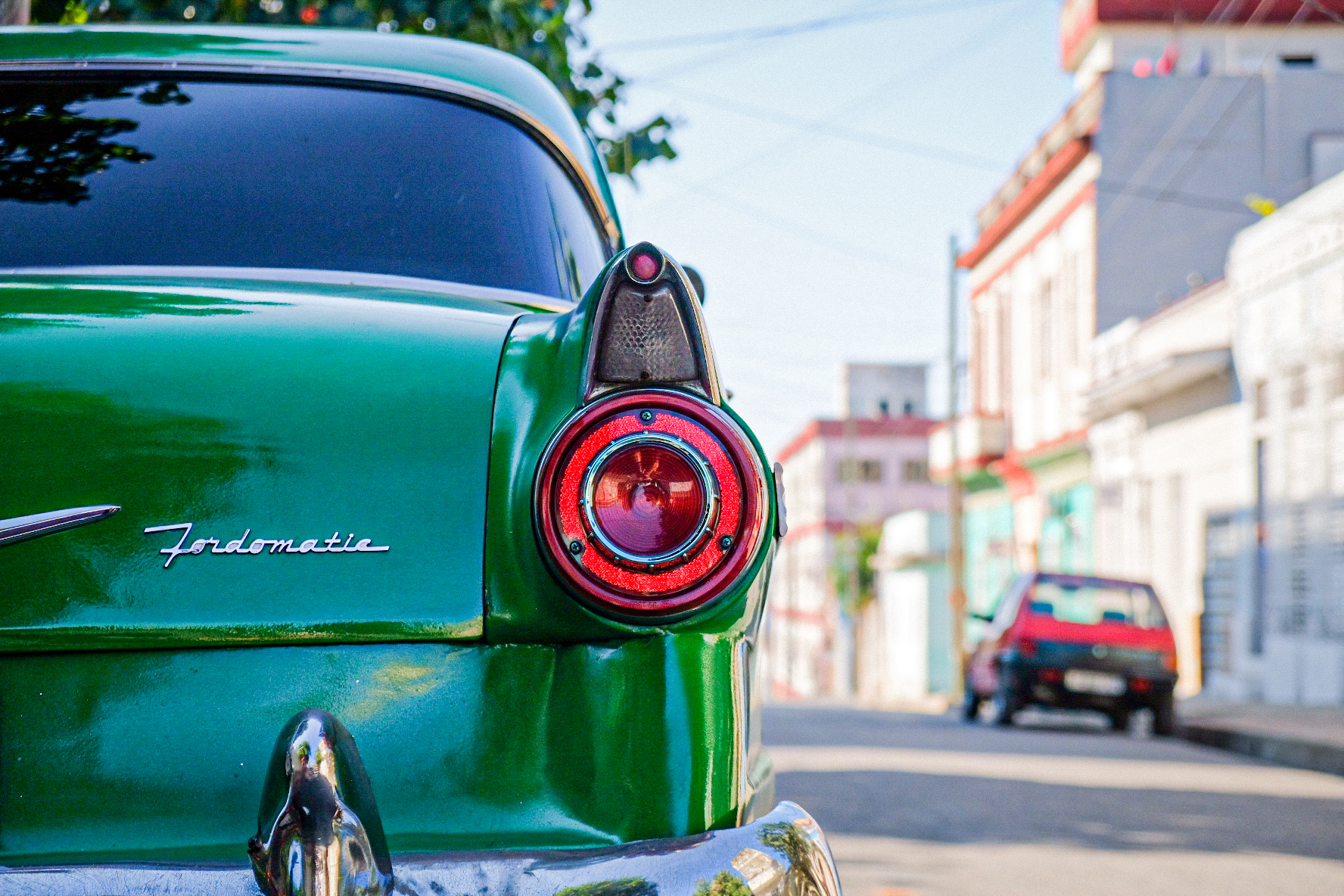
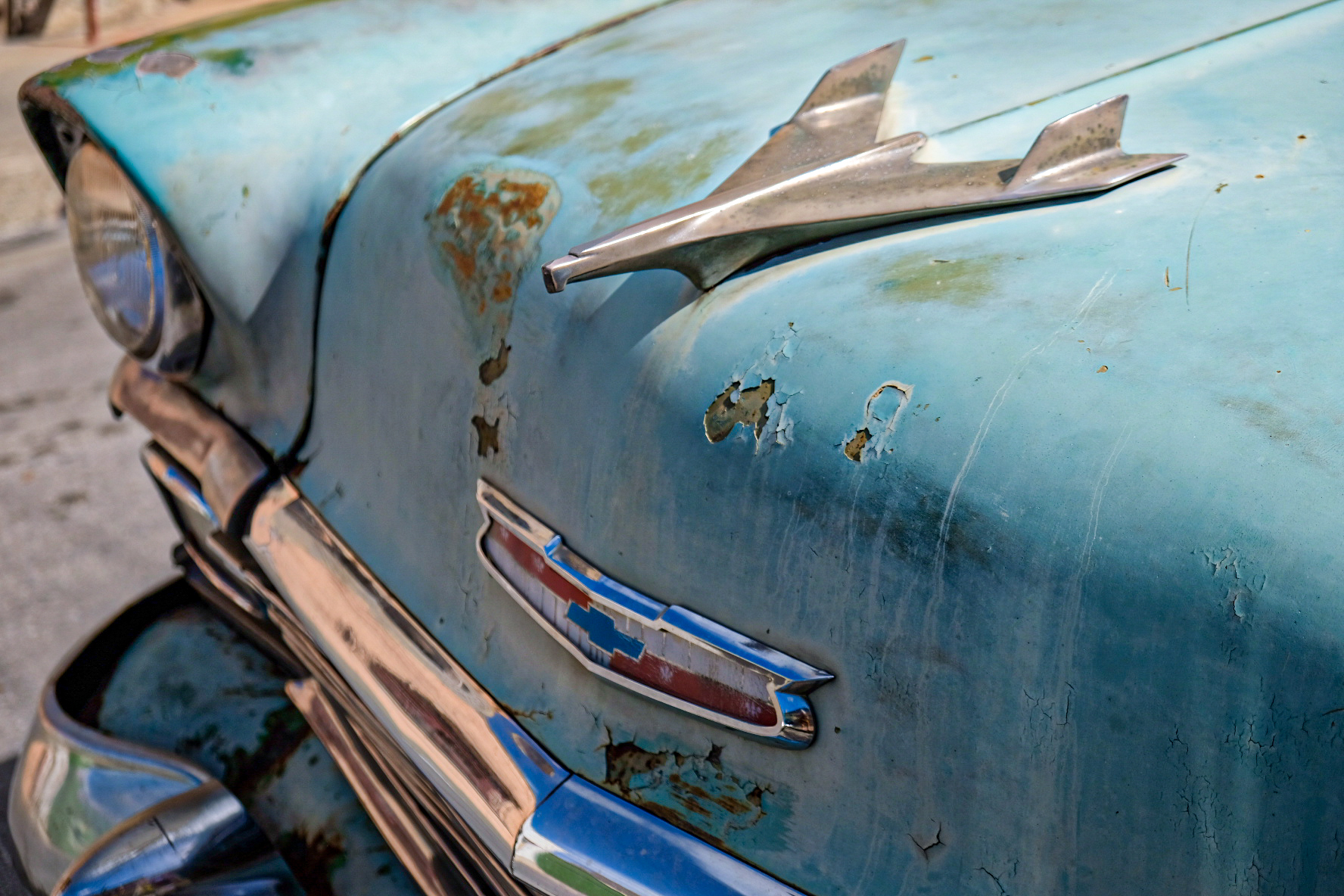
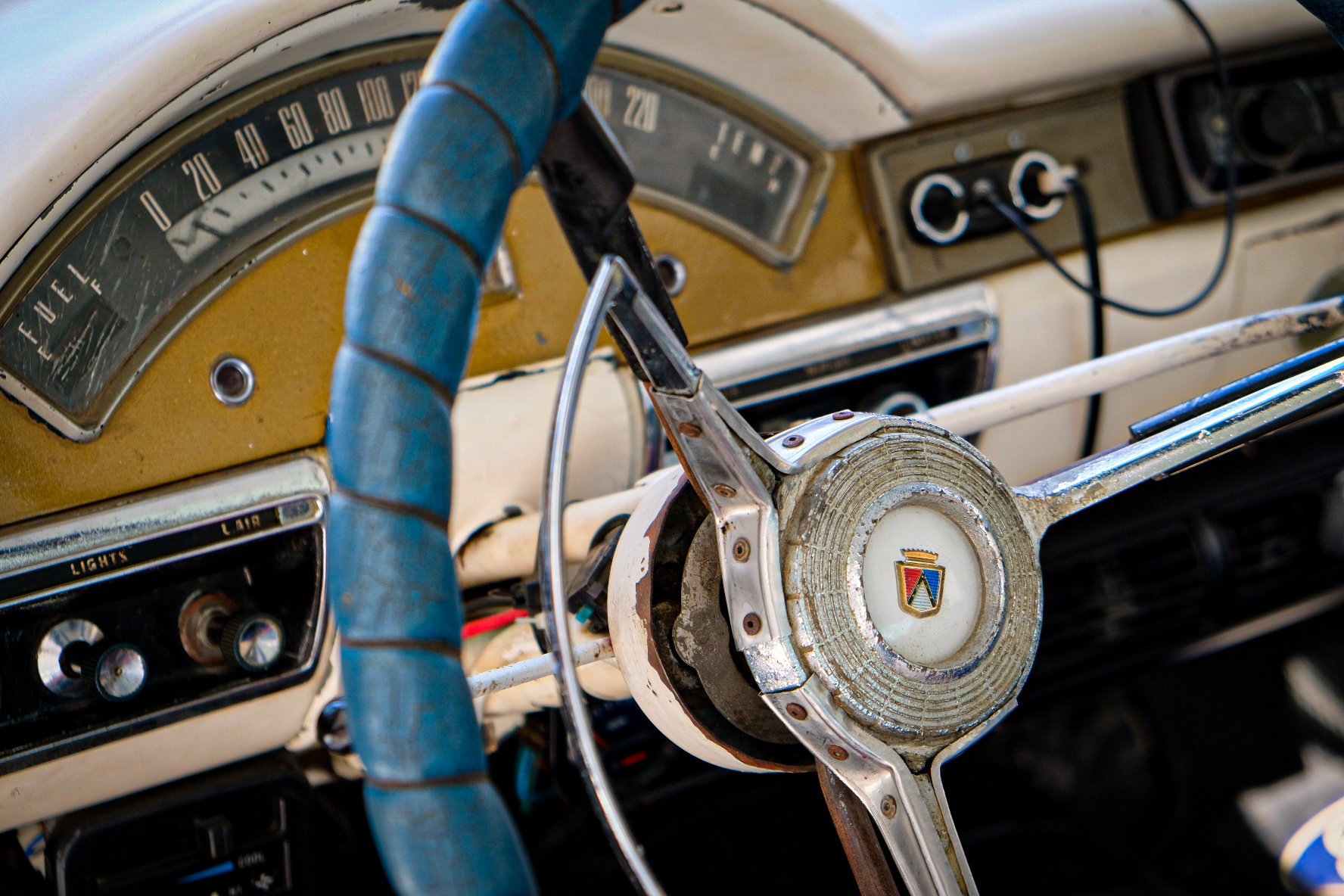
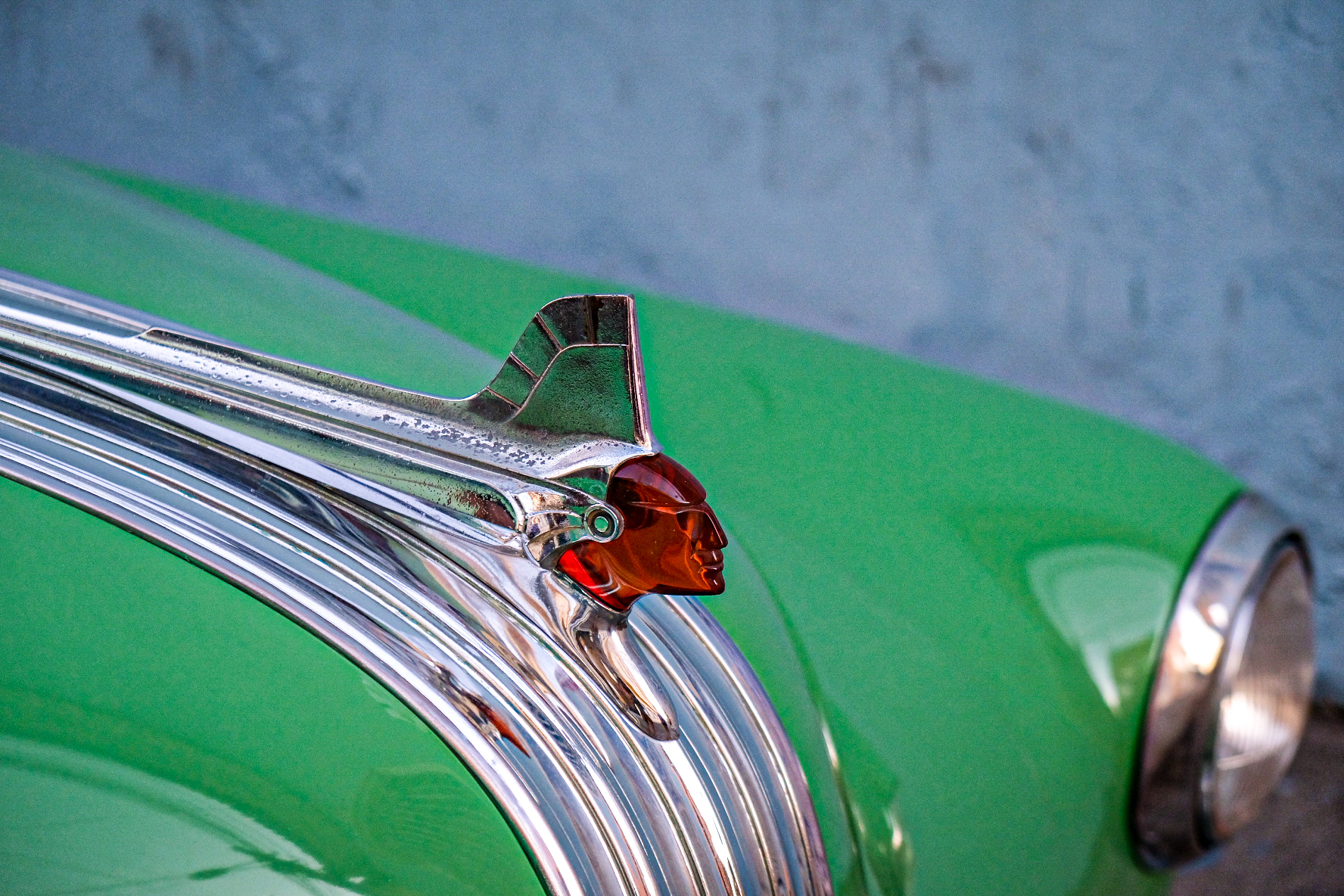
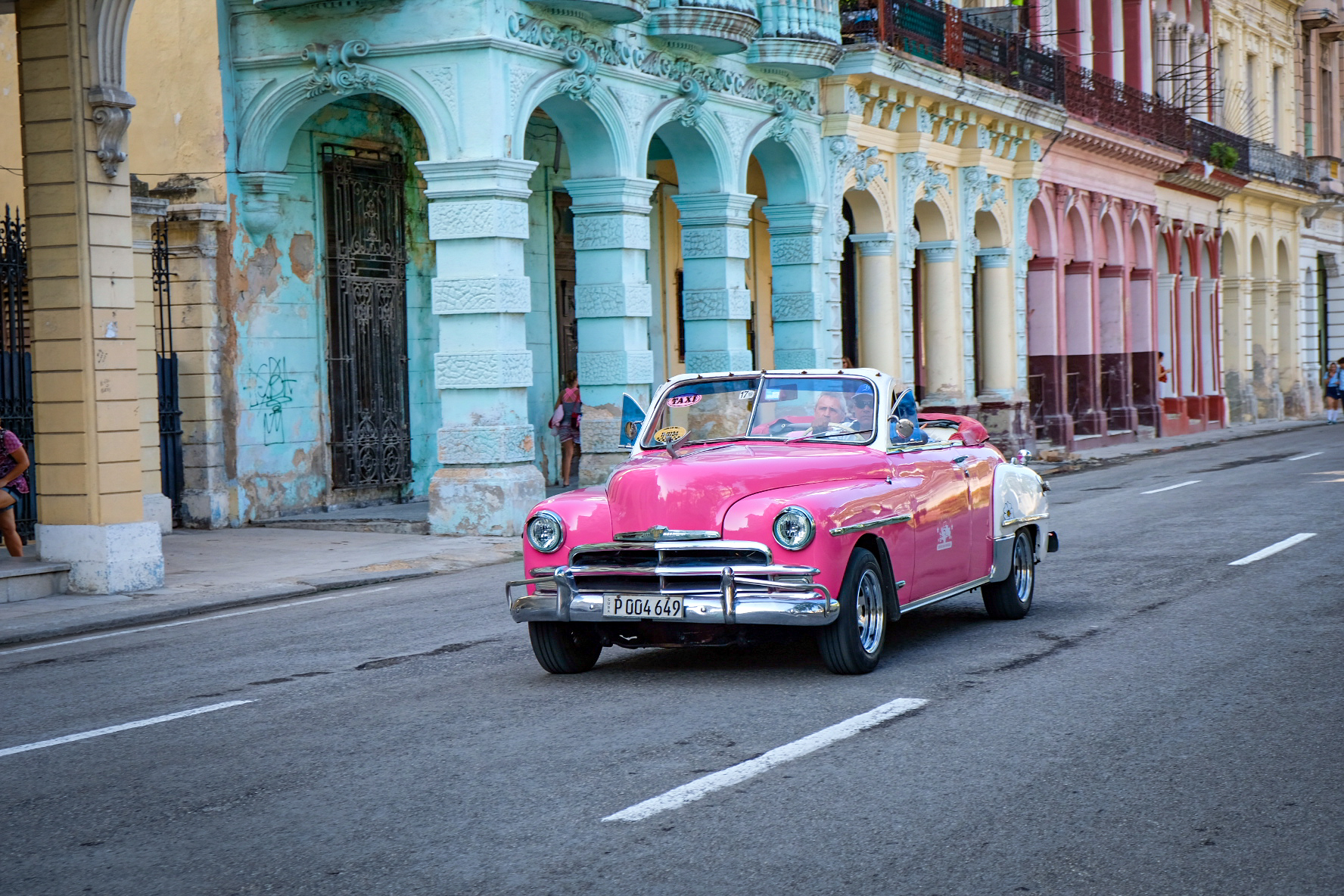
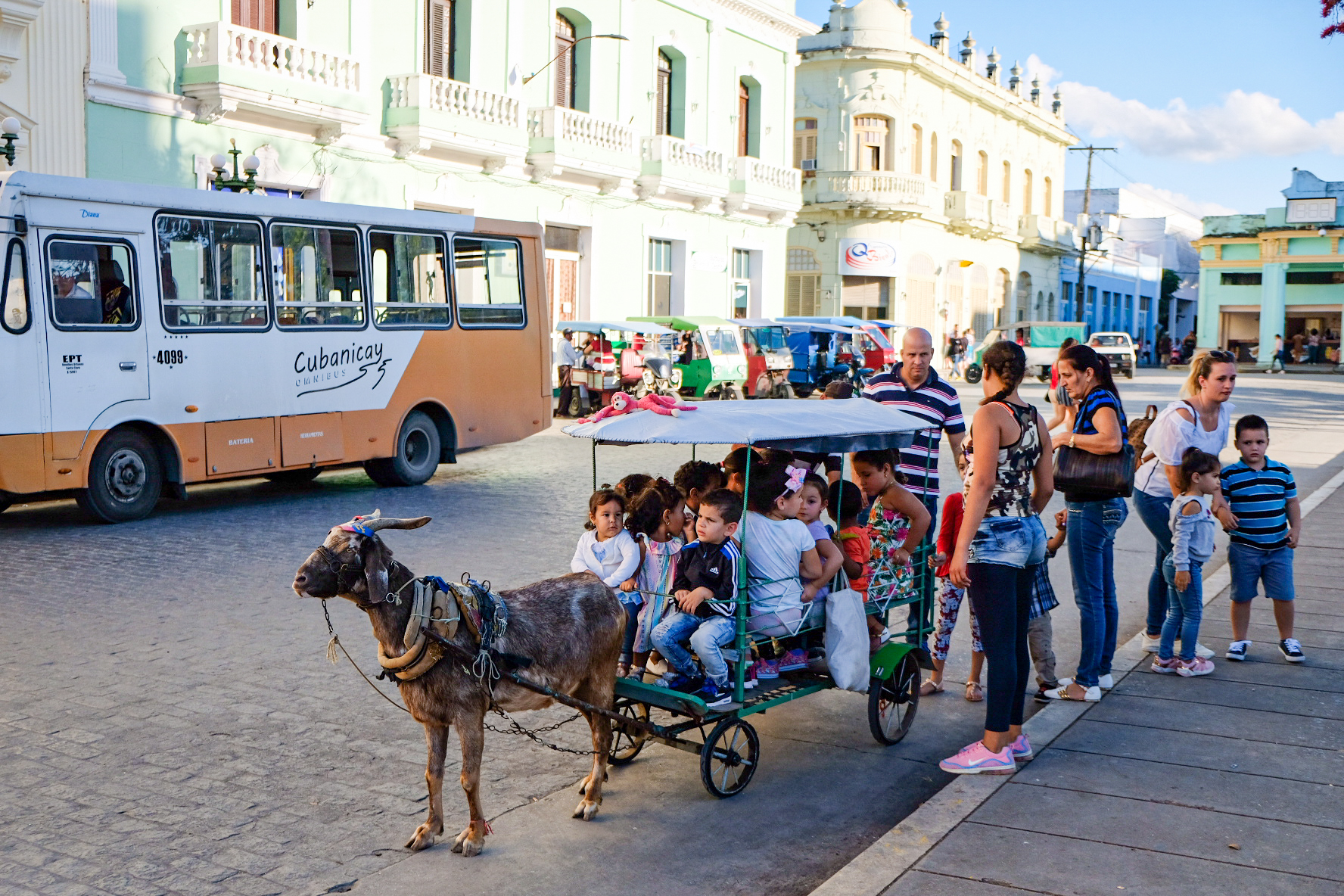
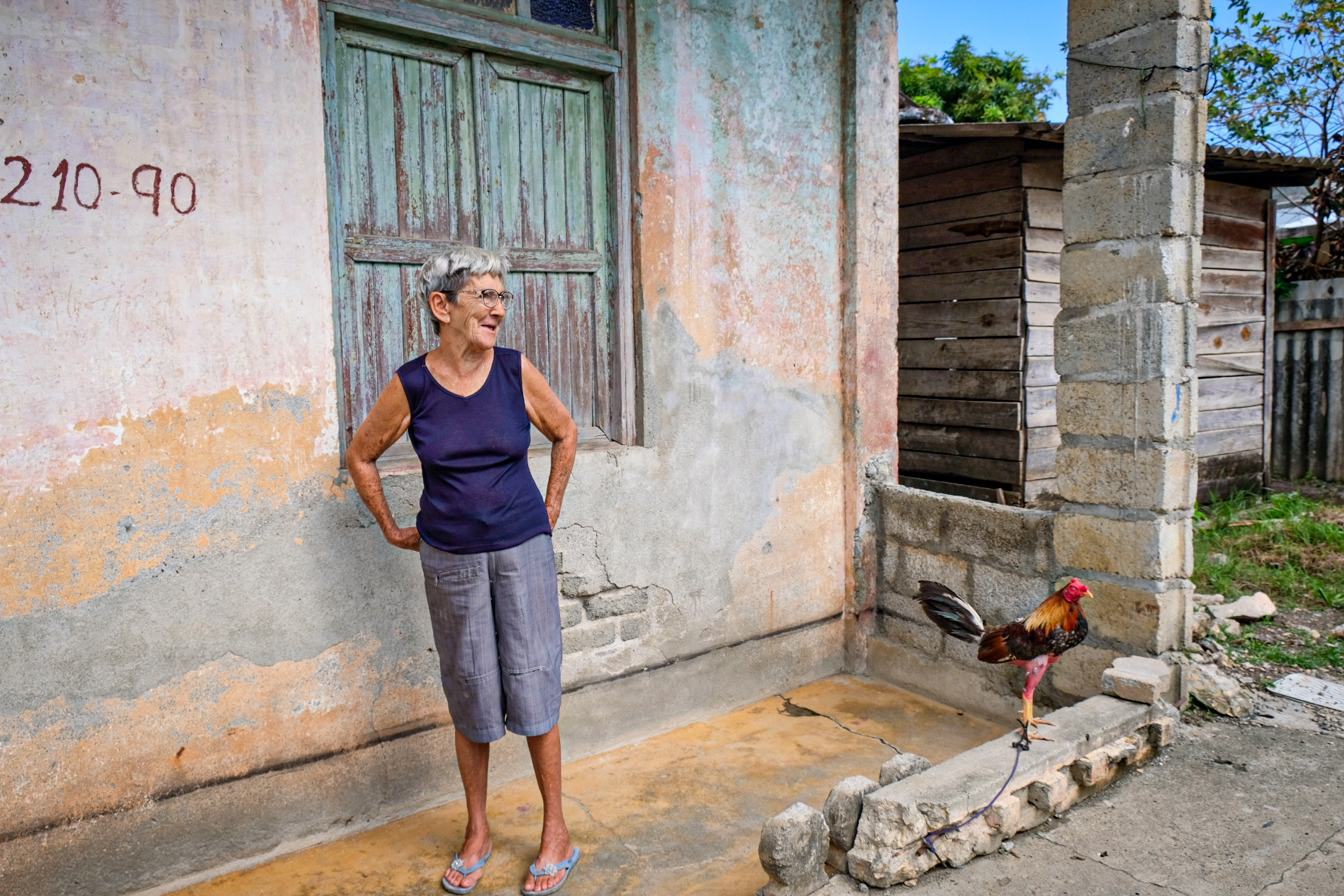
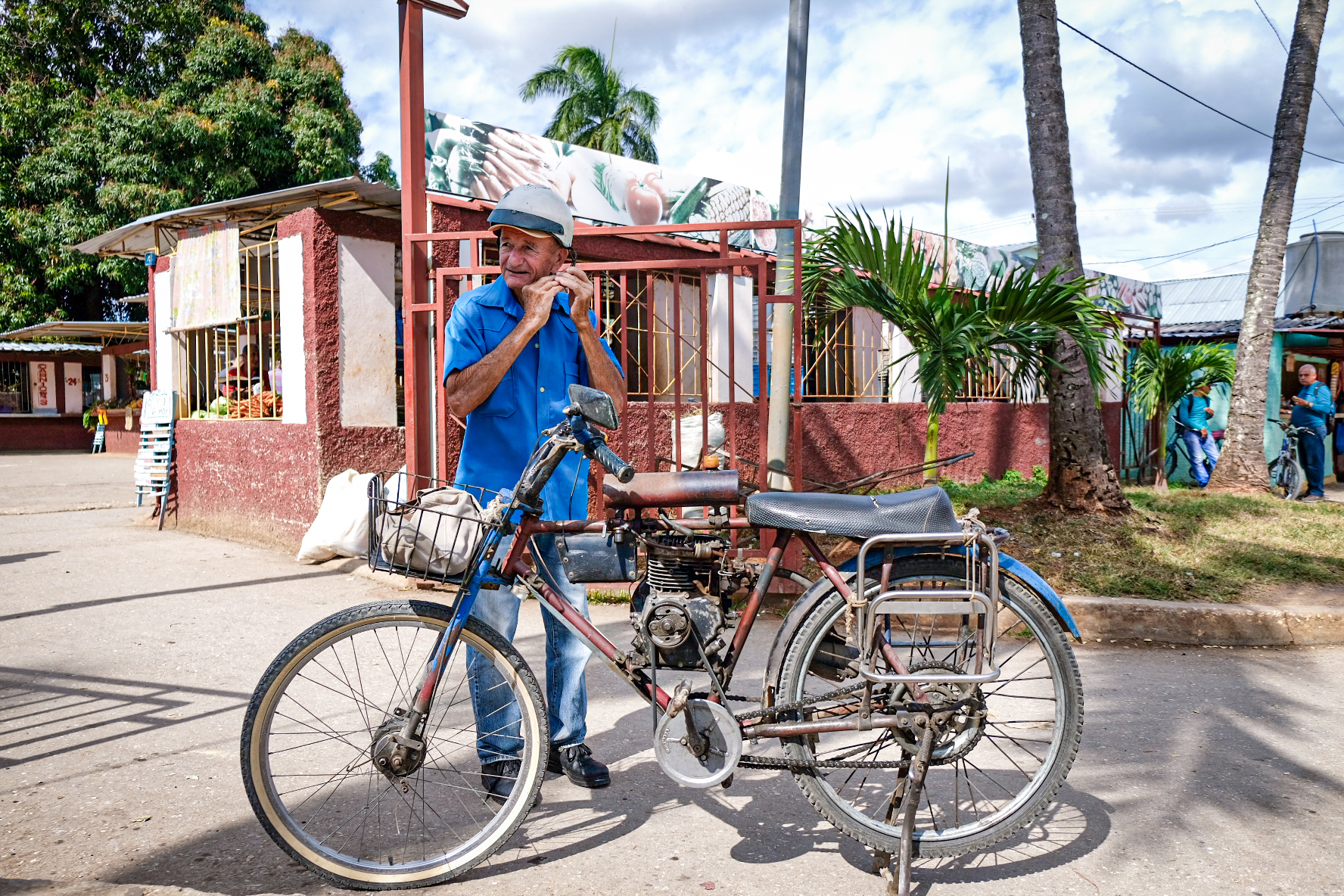
Of all known and unknown outcomes of Cuba’s revolution, one of its most spectacular has to be how it ground the wheel of time almost to a halt. Like the cross-section of an ancient tree, the layers of its tumultuous history are laid bare for all to see. A crash course in anachronism. Teams of oxen plow the earth, horse-drawn carts clickclack on the cobblestones, bicycles from the First World War rattle rustily by, cars from the 50’s prowl the streets like phantoms of a forsaken era… Cuba’s revolution was a bid to regain agency. To thrive or to wither, but to do so by its own means and on its own terms. And for all the blind ideological optimism of such a socio-political movement, there is a certain nobility to it, unique to the human experiment. A sense of humble pride alive in everyone we meet.
Since Cuba arrived late to humanity’s ill-fated dance with socialism/communism, it face from the start the brunt of the retaliation effort. Most notably the USA at the height of its red-scare paranoia. Add a pinch of wounded American pride for being forcefully ousted from what was at the time ‘America’s Playground’; a table-spoon of unfortunate geographical proximity; and a bucket of international political sway, and the result is Cuba’s oddly homogeneous mixture of both succumbing and coping and triumphing under oppression.
Cuba wears its history on its sleeve. Pockets of eclectic eras subsist, coexist and mingle with one another, yielding one of the strangest most vibrant and vivacious human experiments on Earth. To ride one’s bike here is first and foremost a historical venture. It means impeccably maintained mid-50’s cars muscling past us, their heavy steel frame bouncing awkwardly on destroyed pavement, their shoddy suspension creaking painfully under the abuse, their exhaust exuding a thick cloud of black petrol… It also means motor-bikes and buses. And horse-drawn carts straddling the shoulder of the road, stacking the odds against us by caking the way with road apples. Which means we inevitably end up losing the game. Our wheels make road apple pies. A slice of history we invariably end up eating.
And if it can be said that Cuban use yelling as their main method of communication, much much more can be said about their klaxon game. Just ask Ceci, who on one memorable occasion bunny-hopped a full foot (no small feat with a loaded bike) when a matte black ’55 Chevrolet BelAir sped past us honking a classic panther-growl horn, cranked up to sonic blast levels. Rooaaar Roaaar. Ask her how, as we were left shell-shocked and wobbly in its wake, coughing the tar out of our lungs, a crew of men clearing the grass along the highway with machetes laughed at us and waved. Ask her how it was 34°c out, how our last sip of water had been 30km back. Ask her how we waved back and pushed on against the prevailing winds.
Ask Ceci if she was a fan of history on that day.

Lost in Translation Motel
We unclipped and set foot on a dock at the end of a dead-end street on Cuba’s southwest coast with the hope of finding a place to camp. Guanimar. We’d been getting strange vibes all day. Twenty kilometres ago, we stopped in a small village called Las Mangas. From the get-go, things felt… off. A place advertised as a restaurant outright refused to serve us. We accepted the terms offered us without fuss and moved on down the street to an ice cream shop. Where no one would look at us. Much less answer our enquiries. We caught the man behind the counter in the act of serving ice cream to a family standing there. So, ice cream there indubitably was. Just as we were about to set sail for less dodgy waters, the restaurant owner whistled for us from down the road. To go or not to go? We followed the man into a gloomy backyard where we were offered a quick and dirty fried fish served on a dingy picnic table. We ate in silence under the stare of a few people hanging about the yard. Paid. Booked it out of there.
The reason we are standing on a dock is simple: we googled Guanimar and found a picture of a beach. Why beach? Beach equals camping. Why Guanimar? One hundred and forty-five kilometres was about as much as we wanted to bike in order to cut the distance to our next destination of note in three parts. For convenience sake.
Standing there, with mangroves to the left of us, mangroves to the right and a whole lot of mosquitoes in between, needless to say, convenience was playing hard to get. We managed to buy some water but found no food. Someone somewhere told us of a motel up the road. Not exactly our idea of a authentic Cuban experience, not since staying in Casas Particulares for several nights; where you stay in someone’s home and get to share time with your hosts. But the person said the motel was ‘Bien Bonito’ and what with the mosquitoes and the late hour, our hand was forced.
As it so happened Orlandito the motel’s very owner was walking down the street to meet us. All smiles for a change, Orlandito explained to us that he could rent a room. All good and well I thought, although Ceci didn’t seem too too sure.
‘Porque no,’ I said. Why not? After all, Orlandito’s was the only sympathetic face we’d seen all day.
‘Por media hora, o?’ Orlandito asked with a smile. ‘For half an hour?’
‘Qué? No no, la noche entera.’ I said, squinting. The whole night, of course. It’s been a long day and we weren’t after a catnap.
With night closing in, we all walked together to Orlandito’s the motel. His house, really. So… casa particular after all, I thought to myself. It was one of those houses with the water flowing under the back porch and a floating boat parked where a car might be. Florida style, you know? The metal sliding gate next to the passageway that led to the two opposing rooms kind of made us raise our eyebrows. The rooms themselves weren’t much to look at but on the whole we’d seen worse and were in no position to be choosy. There was a shower, no sheets on the bed but, oddly, a large boombox next to the bed. We chose the room on the right. And with a smile and a ‘You’re sure? I know it’s not much but…’ kind of look, Orlandito accepted our money and closed the door behind us.
After which what was lost in translation was summarily found. Motel, you see. In Canada, they’re these squat buildings, usually found on the edge of highways, with a parking space in front of every door. A cheap place for a night.
Motels in Latin America, you see, are never not of the love kind. As in love motel. Ergo the half hour. Ergo the smile. Ergo the guy’s name being Orlandito. Ergo the boombox. Ergo the… what? Condoms and 12 year-old heart shaped chocolates on the pillows?
Why didn’t you tell me?
I thought you knew
What? How would I know?
Es un motel!
Si pero los moteles en Canada… and so forth.
Half an hour later finds us in our cotton sleeping bag liners laying on the bed like two sardines in a dirty dirty can. Eyeing each other through squinting eyes with our mouths so downturned with dismay/disgust that our teeth were showing. Trying, dear god above, as much as possible to avoid touching anything. We each put an audiobook on and prayed for it to spirit us away as far as humanly possible from our current earthly dwellings. And I’m pretty sure we slept, then. For a sweet sweet hour and a half before the room next door was rented out and the boombox was turned up full volume and still failed to box-out the boom underway.
What good pretend like we were sleeping? Ceci and I eyed each other in the dark. Our mind reeling with the dizzying algebra that would yield the precise amount of half-hours there are in one night. The answer: waaay too many. Waaaaaay too many. We both changed to music and cranked our headphones to the max. Anything to cancel out the dirty dirty room and the dirty dirty noises emerging from the room next door. After about a half-hour’s worth of that phase of sleep called non-sleep, whereby you exhibit all the signals of being wide awake and non of the signals of being asleep; the boombox was turned off and the room was vacated.
It must have been past midnight by then because Ceci pressed pause on my music and said to me: ‘Feliz Navidad.’
‘Feliz Navidad,’ I said.
And indeed, what a way to spend Christmas Eve. I think we laughed, then. Or sobbed. There’s a point where the two sound the same. Indistinguishable. And there is a reason for this which is quite straightforward, although it had never occurred to me before this, the most infamous night of our lives. Because there exists a limbo of discomfort that is so pitiful and strange that it is virtually impossible to ascertain what emotion you’re left feeling. Whether to laugh or cry or pass out; there exists no appropriate reaction.
All we could do was pray, although whether God or Jesus or Buddha or whoever would listen to prayers surfacing from such a place is, at best, doubtful. ‘Please diocito mio, lower the libido of Cubans for just this one night. Amen.’
To this day, every time we hear or read the word Motel, it instantly sets off a deafening Tinnitus in our ears. Motel. Eeeeeeeeeeeeeeeeeeeeeeeeep. Our headphones cranked to the max, the boombox, and the sounds of 16 half-hour’s worth of Christmas… hum… cheer? coming from the room next door.
Feliz Navidad, indeed.
The next day we woke up before daylight, touched nothing, packed our bikes and were gone before you could say ‘Ho-ho-ho!’ Our route led us along this beautiful dirt road with a swamp on one side and a mangrove forest on the other. Every 100m or so, the road was intersected by flowing cement dykes. An engeneering project no doubt designed to regulate how much fresh water is allowed to flow into the sea. I don’t know. The point is, the cement ramps down, stretches on for about 10-15 metres and ramps up to the dirt road again. There’s a cement wall on the swamp side and in the middle there’s an inclined stretch of cement. Covering both is the slipperiest algae known to man. I walk my bike across. Ceci Danger being Ceci Danger, she decides she wants to ride the cement wall. With a 5 metre deep swamp on one side and a 1-metre drop and a slip and slide into the ocean on the other. Why the suspense? You and I both know she survives. Otherwise, what a way to spend Christmas day, indeed…
I told her ‘No way, Joselito.’ And so, as a concession, she rode her bike across the safer and wider, if off-camber, incline. And goes for a swim. Just the moment her wheels touch the algae, gone. Sweeep and splash. Before breakfast. Before sunrise. Soaked in swampy goo. It was just one of those Christmas mornings…
About 20 dyked kilometres down the road, we reached a small fishing village. Famished and still in denial of the night before. I rode over to a group of about 9 people to ask for food and directions. The dyked road was not on our map, but since it ran parallel to the ocean, we figured we’d give it a whirl. So where exactly we were other than in Cuba, we had no idea.
Everyone’s already eyeing me by the time I say ‘Hola!’ and proceed to entirely fail to unclip. And to crash sideways onto—I swear to god, the only paved surface in Cuba—directly at their feet. The group went bananas. From one moment to the next I was the funniest man in all of Cuba. No one even offered me a hand they were having so much goddamn fun. Meanwhile, I’m on the ground, like a turtle on its back, unable to free myself from the weight of my carapace/bike. When I finally got up again, I told them that since we hadn’t had coffee, I fell down to better wake myself up… And won some extra chuckles.
After much door to dooring, a whole village worth, we eventually found someone willing to rustle up some breakfast for us. Maybe god hadn’t forgotten us after all. Maybe Santa Claus didn’t find out how naughty we’d been after all.
He sees you when you’re sleeping
He knows when you’re awake
He knows if you been bad or good
So be good for… A mayonnaise and deep fried fish sandwich and a tall glass of cold off-brand Coke. The fishes eye glaring at us from the side of the sandwich.
Well, you take what you can get!
Gente de Corazón
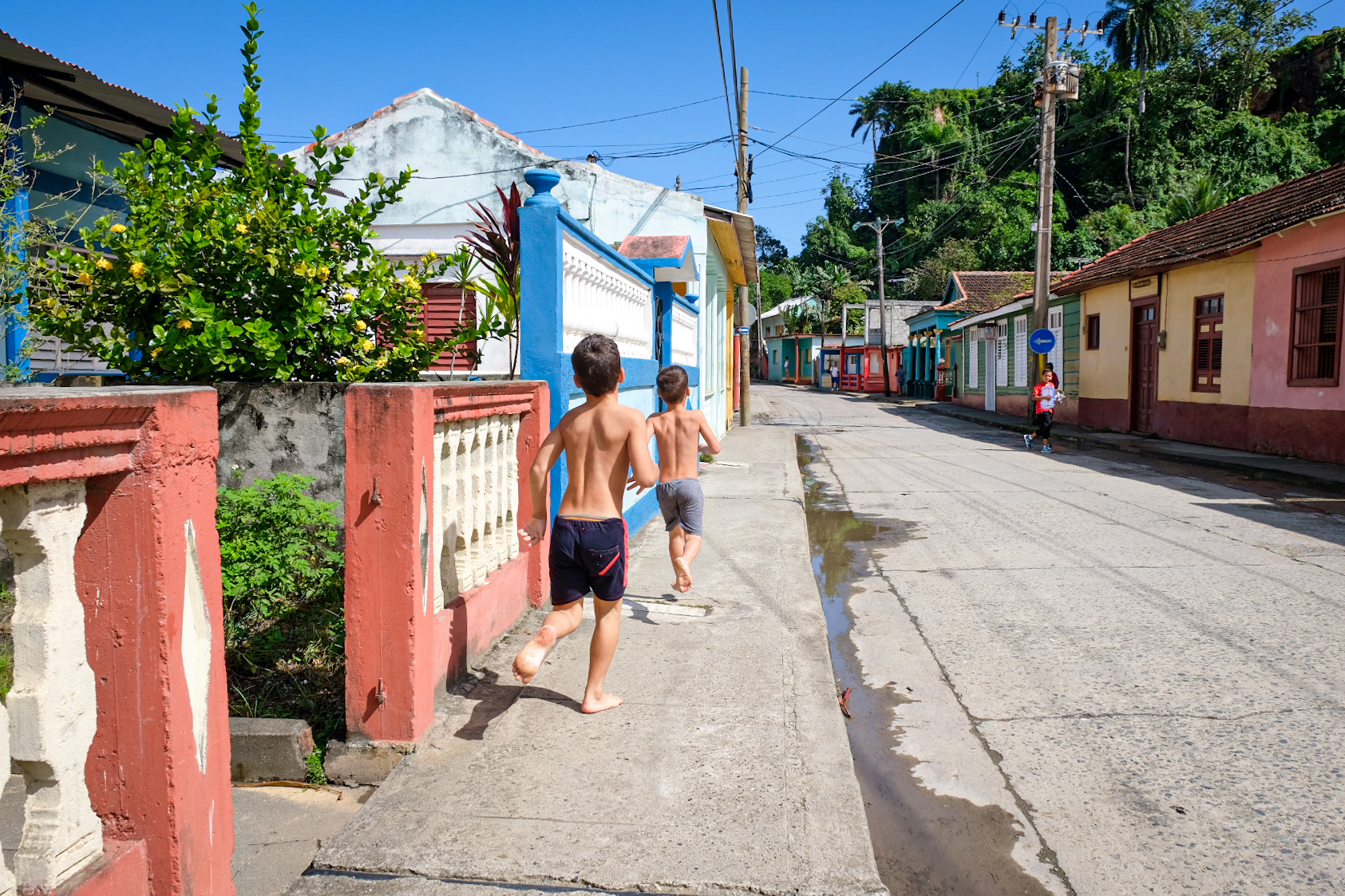
A garbage trolley on metal wheels hits the cobblestones on the off-beats. The steady 2:4 time of a horse-taxi. Down the street a tractor-motor drives its syncopated Afro-Cuban counter-rhythms into the fray. Blocking the flow of traffic it inspires a symphony of off-pitch car horns and honks. Up on balconies, from alleyways and the leather seat of ancient Pontiacs and Fords: singsong voices, scuffed by a lifetime of yelling. They pierce the cacophony of the night with their nasal taunts, whistles and raucous laughter. A chaotic convergence that saturates the ear and yet, somehow, achieves homogeneity. The sounds of daily life, lived in the streets. Here, the rhythmic and melodic roots of Son Cubano. Here, the music of Cuba.


We emerge from our Casa Particular after a quick shower and a change of clothes, our minds focused on a failing inward mastery of wabi-sabi. Outwardly? We’re probably arguing, right about now. The roads have parboiled us into foaming, ravenous beasts each backed into its own corner, baring teeth; our cunning turned sour, our focus narrowed to our own discomfort, which is substantial. We’ve reached that point whereby we’re so immersed into the experience that we can’t also be out. It has become virtually impossible to step out of ourselves, even for a moment, to see the little demons perched on our shoulders, who yell into our ears, who tug at our moods and who fill our heads with negative thoughts.
We walk at a military pace towards food. Any food. Acrobatically dodging the dozens of myfriends and whereyoufroms shouted at us from street corners. The pizza restaurant is out of tomato sauce; the one store in town without empty shelves has a line of people stretching around the block; the next three restaurants have run out of food and our slim/non-existent budget doesn’t allow for the fourth… We’re delirious by the time we finally settle for a cheap eatery with a surprisingly varied menu. Salivating, we swiftly scan the menu and select two meals each. And sit, there. Sit there. Sit there, waiting for the waiter. For the…
‘Pollo o cerdo,’ the waiter says, nonchalantly.
We look up from our menus, swallow saliva and ask, ‘ Y el potaje, la pasta, los frijoles, la pizza..?’
‘Chicken or pork,’ he repeats, nonchalantly.
‘Chicken it is…’
Thankfully, once found, a meal in Cuba is a meal. And a plate usually comes loaded with rice, yucca, fried plantain, fresh cabbage, sweet potato fries and meat that is fried, not to say boiled, in rum-coloured oil.
Food in Cuba always runs out by early morning. People line up, first thing, to buy the day’s ration of goods, be it chicken or bread or milk, and by the time we make it to our destination, circa 1-2pm, most stores and restaurants are closed and there is little-to-nothing left for us to eat. And this is exactly the impasse we cycle into every time we are asked to talk about our experience in Cuba, because while food ran out daily for us, for the month and a half of our trip, it is just a brief sample of Cuba’s long history of scarcity.
It is just what we have coming for the arrogance of looking at a map and saying, ‘Hey, let’s circumnavigate this island.’
We are here voluntarily. Just as voluntarily as we can not be here. What is our hunger, despair and exhaustion when compared with the hunger, despair and exhaustion experienced by a vast portion of the country’s inhabitants under both communism and USA sanctions? This is what makes it almost impossible to broach the subject of our own suffering without sounding impossibly entitled and privileged. I say almost impossible because I trust that there is enough empathy in your heart for both the Cuban people and us. Enough to allow us to broach the subject of our experience without in any way lessening the burden borne by Cubans over the decades and still.
Our hunger, our desperation, even if microscopic on the scale of Cuba, is still macroscopic on the scale of two humble cycle-travellers. Living it forms an integral part of the immersion process we seek by throwing ourselves in the deep end of the travelling pool. Even if, in the moment, it wears us down to rusty husks of better ourselves; scarcity is the day-to-day reality of Cuba. To experience a slice of it, however humble and comparatively negligible, is what unlocks the empathy necessary to glimpse the extraordinary humanity of Cubans.
Gente de corazón. The Cuban heart holds a disproportional share of world heritage. Of what it means to be human. In our books, in our gathering and collection of all the colourful examples of humanity; the spectacular creativity of Cuban resilience, the profound authenticity of their character, their boldness, candour, humour and sincerity… the Cuban chapter is one we uniquely cherish.
When our plates arrive, our first meal since 7:30am, we swallow it whole. And when we settle up and step out into the 3pm sun, blinking like daytime movie-goers, drunk on food; we are once again wearing our (slightly) better-selves. Our devils warded off for the time being.
Now to find water!
An hour later, Ceci is sitting before me, silently chewing on the salty little chunks of powdered milk in her coffee. I’m still shaking my head, because a few moments ago, a blind man walked two bustling city blocks to ask me to help him cross the street.
‘Hmm.. claro,’ I said, unconvinced, ‘suuure.’
As we reached the other side, he held onto my arm, looked me in the eye, and asked me for money. And so, still in awe, Ceci and I stare at each other silently, wondering about the dubious nature of the lesson we were just taught. We aren’t allowed to dwell on it too long, however, because across the street the ice cream place has just opened and people are losing their minds.
A line in Cuba is a sort of “Ceci n’est pas un pipe!” phenomenon. This is how it works. To the best of my befuddled understanding. First thing, when you arrive to any establishment, you always ask the people hanging loosely around the premises: ‘Ultimo?’ – ‘Who’s last?’
After which, someone answers: ‘Yo’ -‘Me’, and proceeds to tell you who the person in front of them is. Then, when someone arrives after you and says: ‘Ultimo?’ -‘Who’s Last?’, you say: ‘Yo’ -‘Me’… and so forth.
Great. We’re still in Kansas. Hang tight. The next step is a bit of a disappearing act, whereby people—confident that their place is safely remembered by the people before and after them—just straight up leave to do other stuff.
Now. The door of said establishment opens. Suddenly, we’re not in Kansas any more. People start rushing in from the woodwork and a furious game of ‘Who’s Who!’ starts. You’ll understand that, if as little as 2 consecutive links of the chain don’t come back in time, the whole affair falls apart faster than you can call ‘Jenga’!
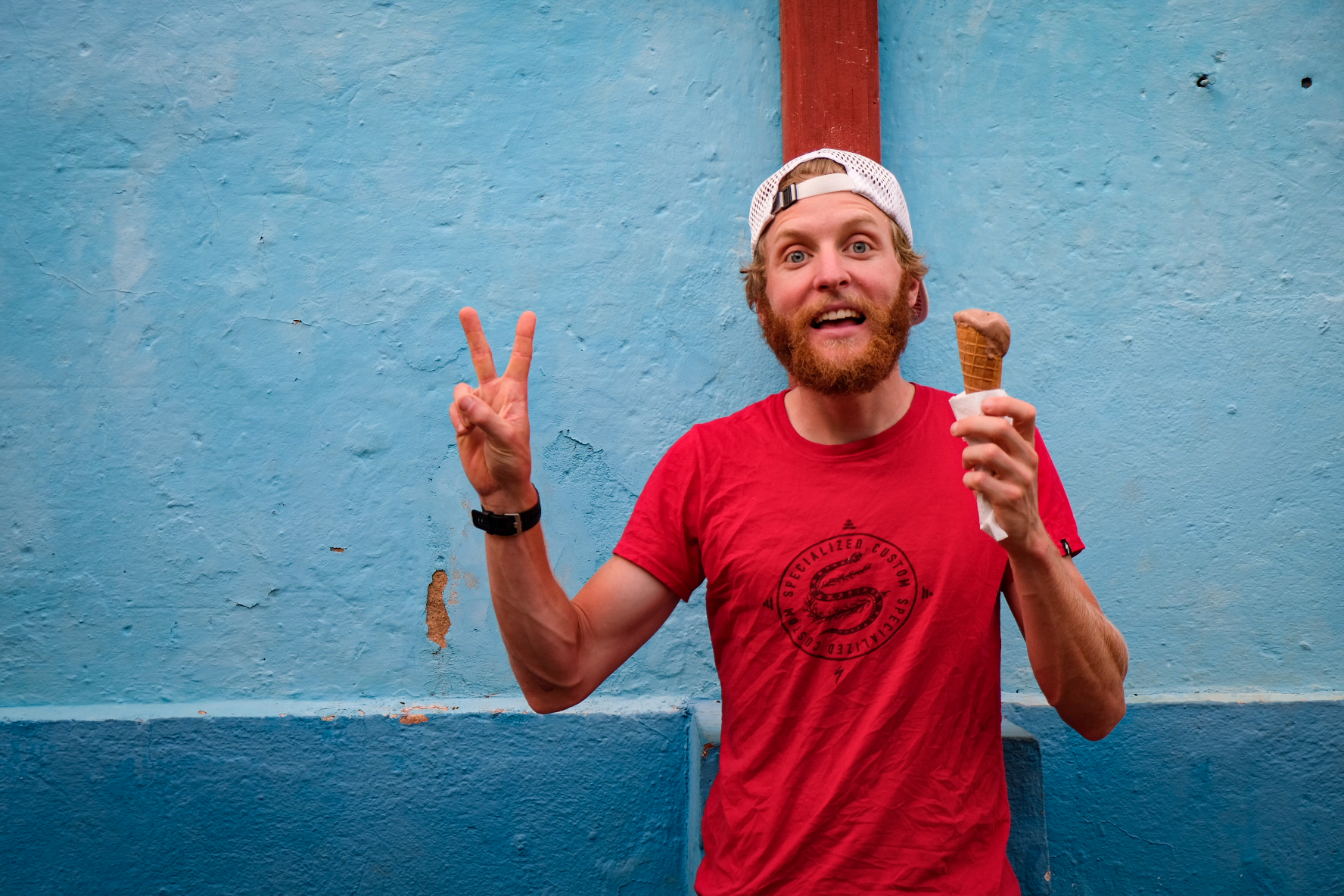
All the more so, when the line is for Coppelia, the national ice cream chain. Cuban’s go nuts when ice cream is involved. The existence of which, if you’ve read this far, should bewilder you as much as it does us. In a country without food? Ice cream? Even if made in Cuba, even if the ‘cream’ is really Vegetable Oil… Somehow: ice cream. For which people go absolute bananas. At any one time, a table of four can destroy 16 four-ball sundays and a full cake as a dessert. Sixteen! That’s… 16×4… a boat-load of ice cream! Now, in case you’re thinking I’m making these numbers up, think again. That is exactamente how much ice cream there is on every table thanks to the strictly enforced 4 Sundays per person limit.
Exceed this limit at your own peril!
Tiny Theatres
After hours, Cuba breathes a deep sigh.
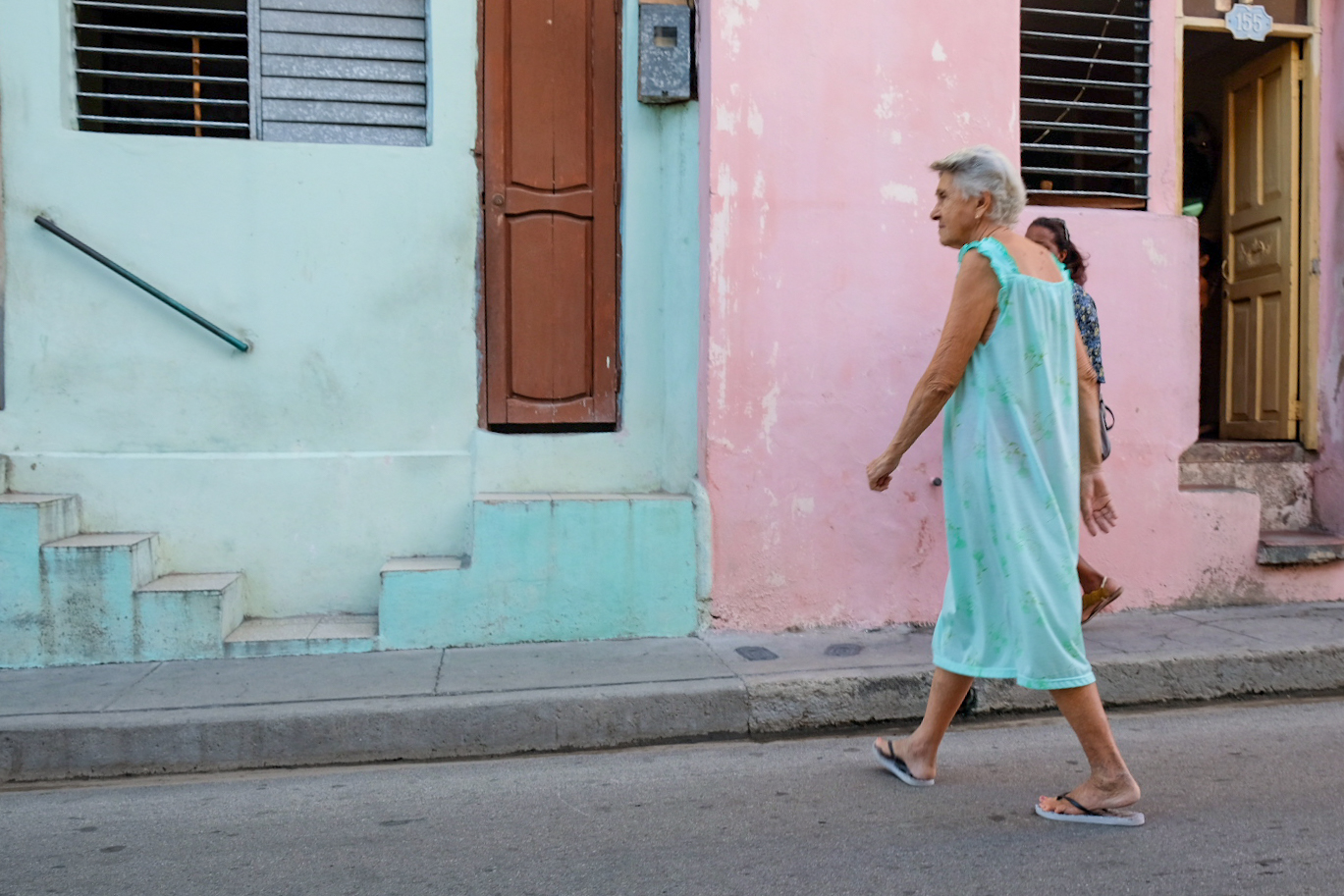
Another day on earth has been overcome, the daily dash to carpe diem fades into the satisfied complacency of tomorrow is another day. A distinct groove settles on the streets, and like strangers at a wedding, Ceci and I share a sort of intimacy usually reserved only for kin. Señoras waltz the streets in light nightgowns, rollers in their hair, hawking their best scandalousness like wares to their distant relatives who are wrapped in salsa embraces with the twisting iron of their front gate. Whistling youngsters cluster in clans, either leaning on cars as old as combustion itself or prowling from door to door, mocking others so as to be mocked in return, to the enjoyment of all.
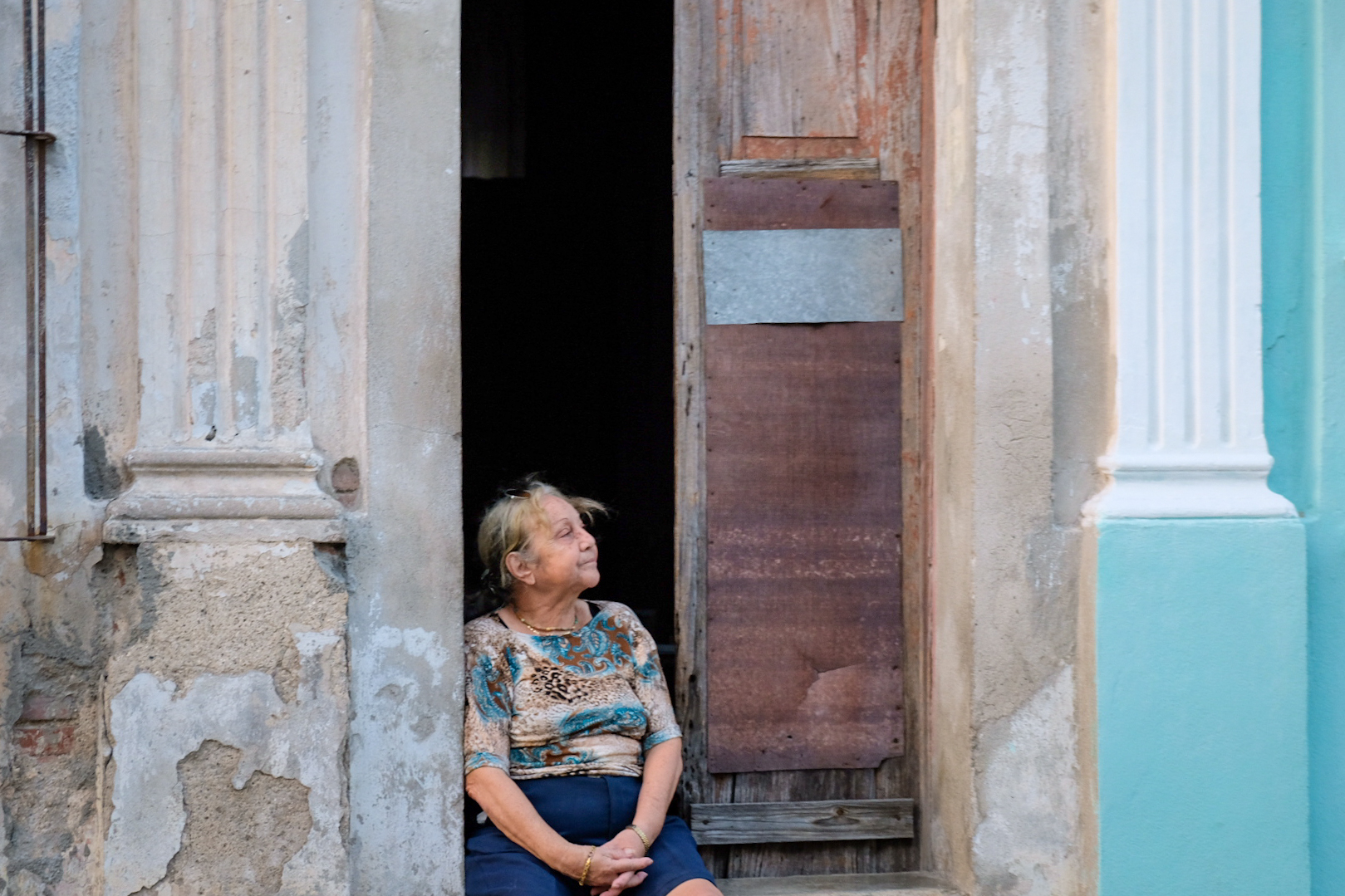
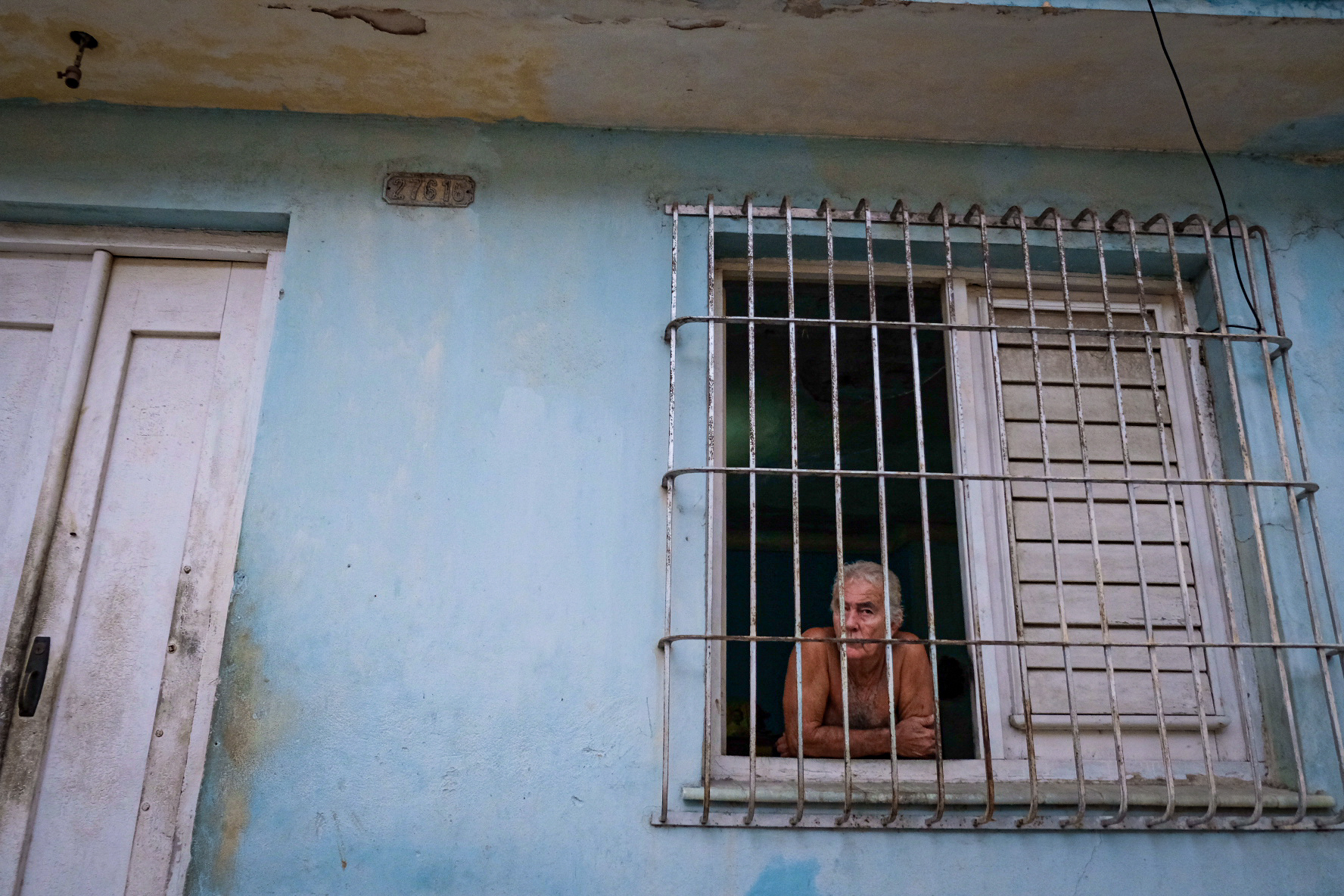
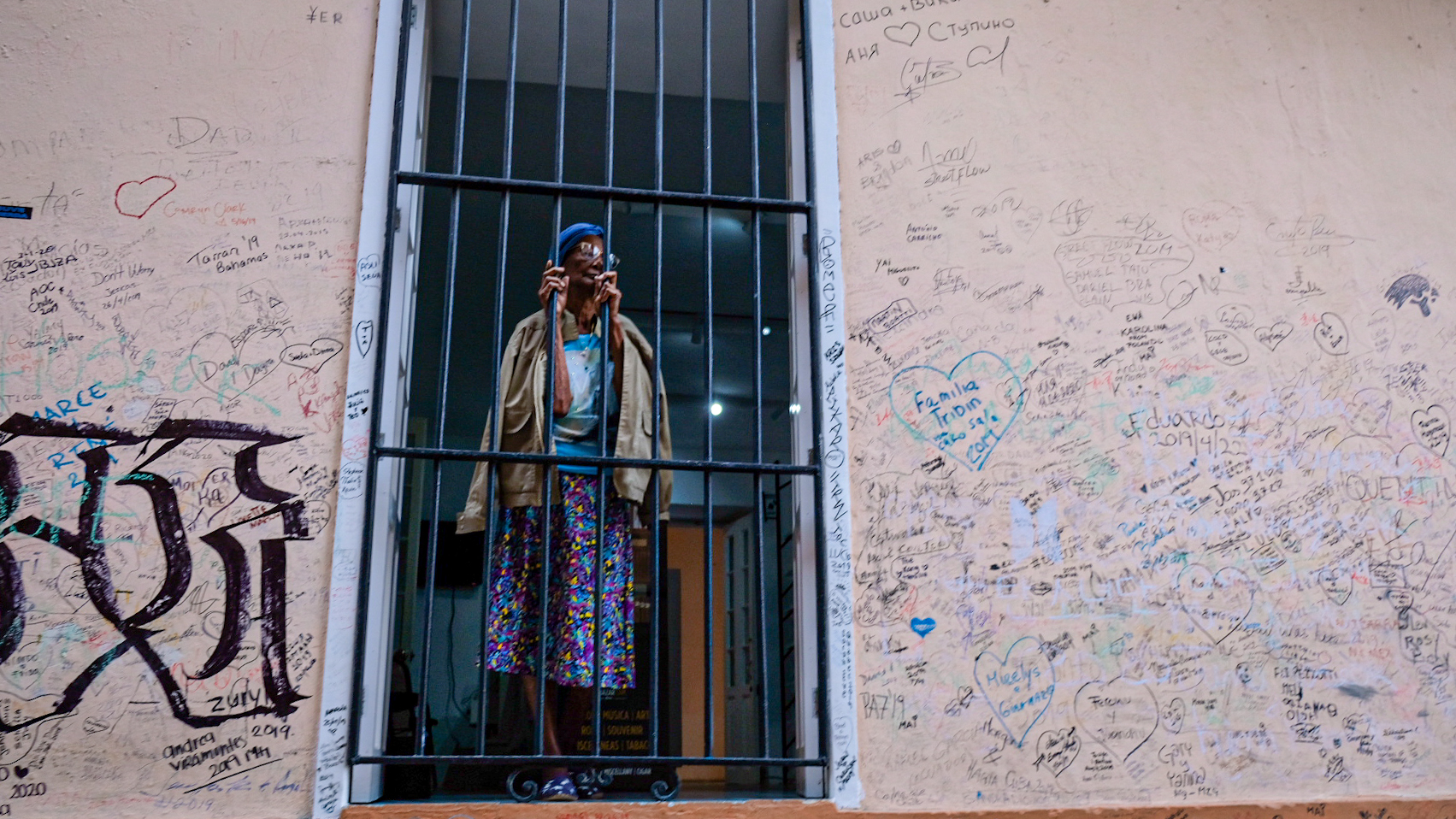
The heart of every home comes alive. Each a tiny, dimly lit theatre to be glimpsed through Cuba’s ever open doors and windows. One light bulb, sometimes two, but amply bright for us who peruse the charcoal darkness of the unlit streets. Secret worlds, but never shy, never averse to the attention of others.
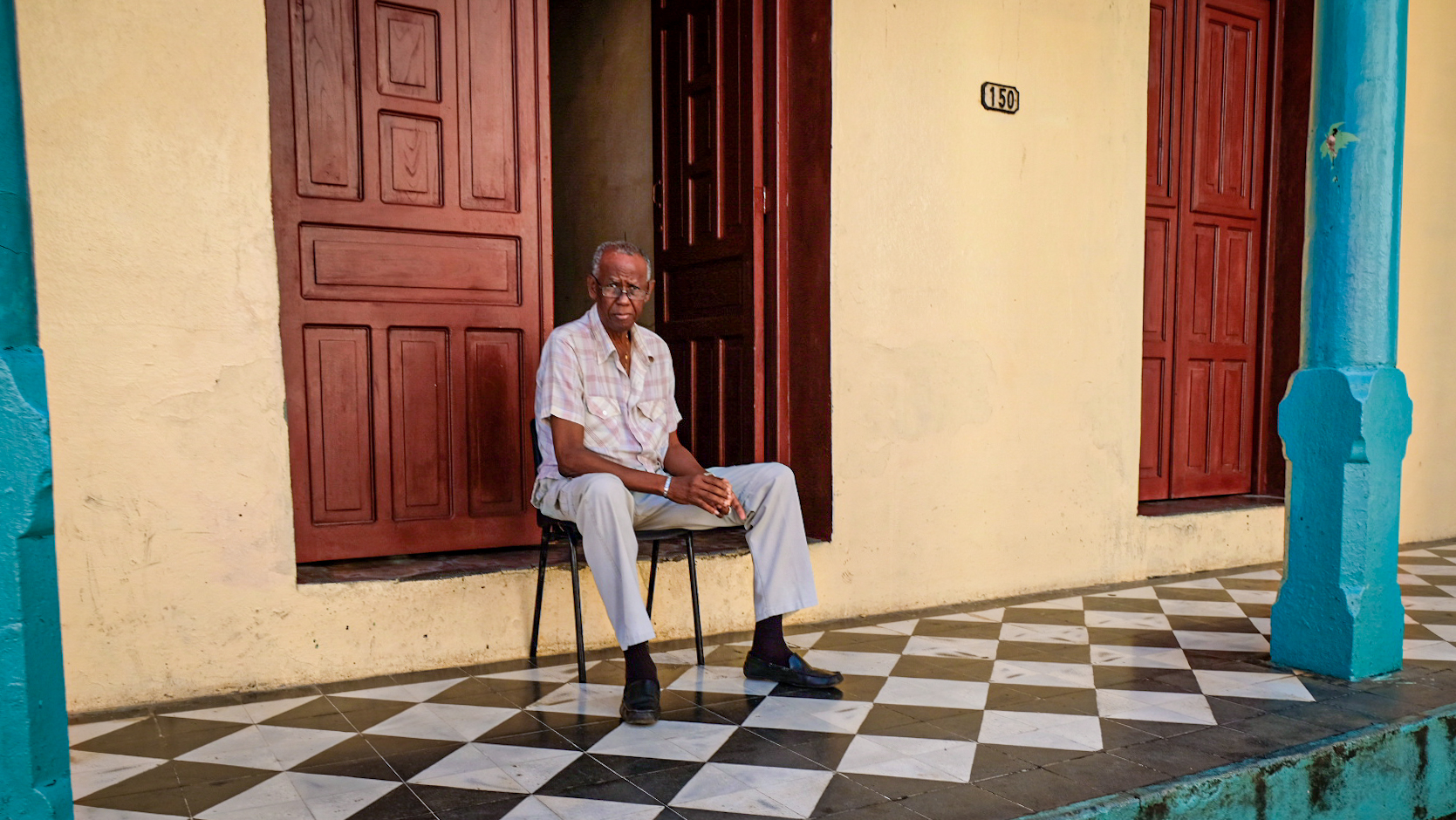
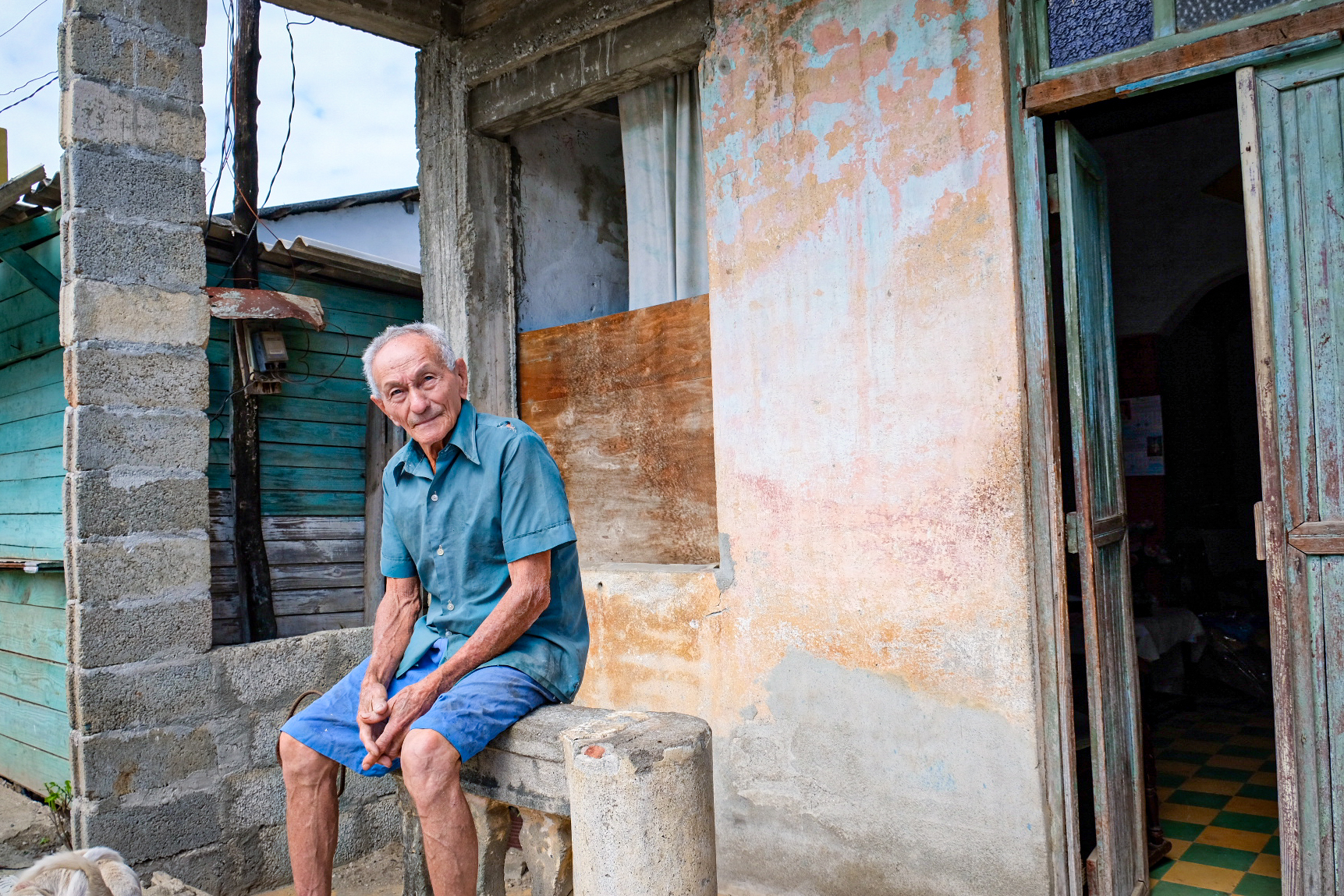
Linger long enough and you will invariably be included into the play. Here a family scene, there an intimate dance of granddaughter with grandfather; here a mother, her flip-flop raised threateningly mid-air; there, diced onion on a kitchen counter a radio playing in the backroom. Every open door a peeling frame for the daily art of Cuban existence. Every weathered windowsill, the faded yellowed corners of a photograph portraying another epoch.
Cuba’s streets unwind like reels of black & white film brought to life in breath-taking colour. The chipped paint of every façades revealing layer upon anthropological layer of thick sun-bleached colour, each a page in Cuba’s book, where one can read the open book of its turbulent history, its ingenuous adaptations to being embargoed into place, into time. Each a petrified strata of a country constantly reinventing itself while never not honouring its past selves.
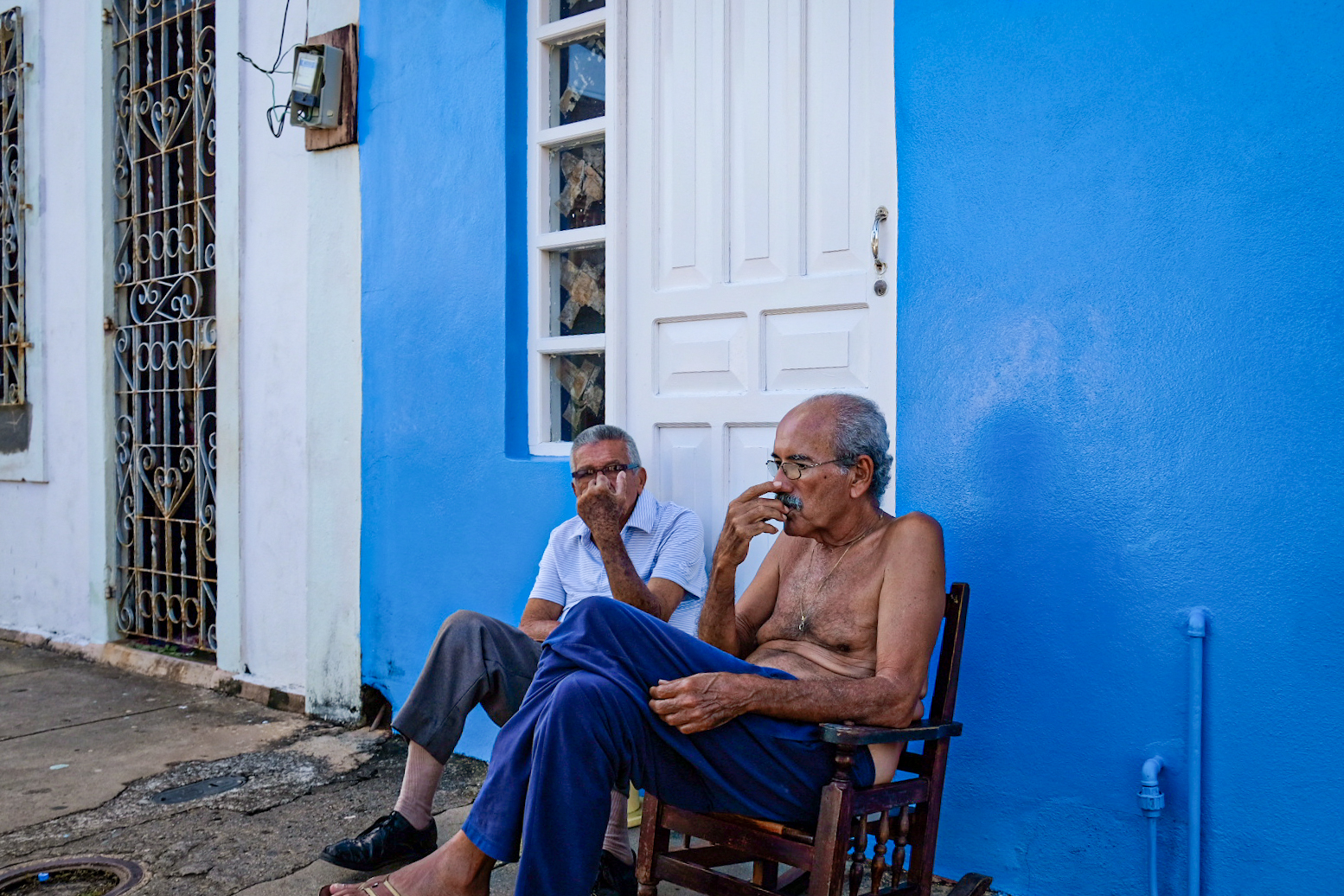
Redoubtable, frank and open, the Cuban character is anchored in pride for the collective struggle, for the authentic and noble national identity which persists in many ways due to and in many ways despite communism.
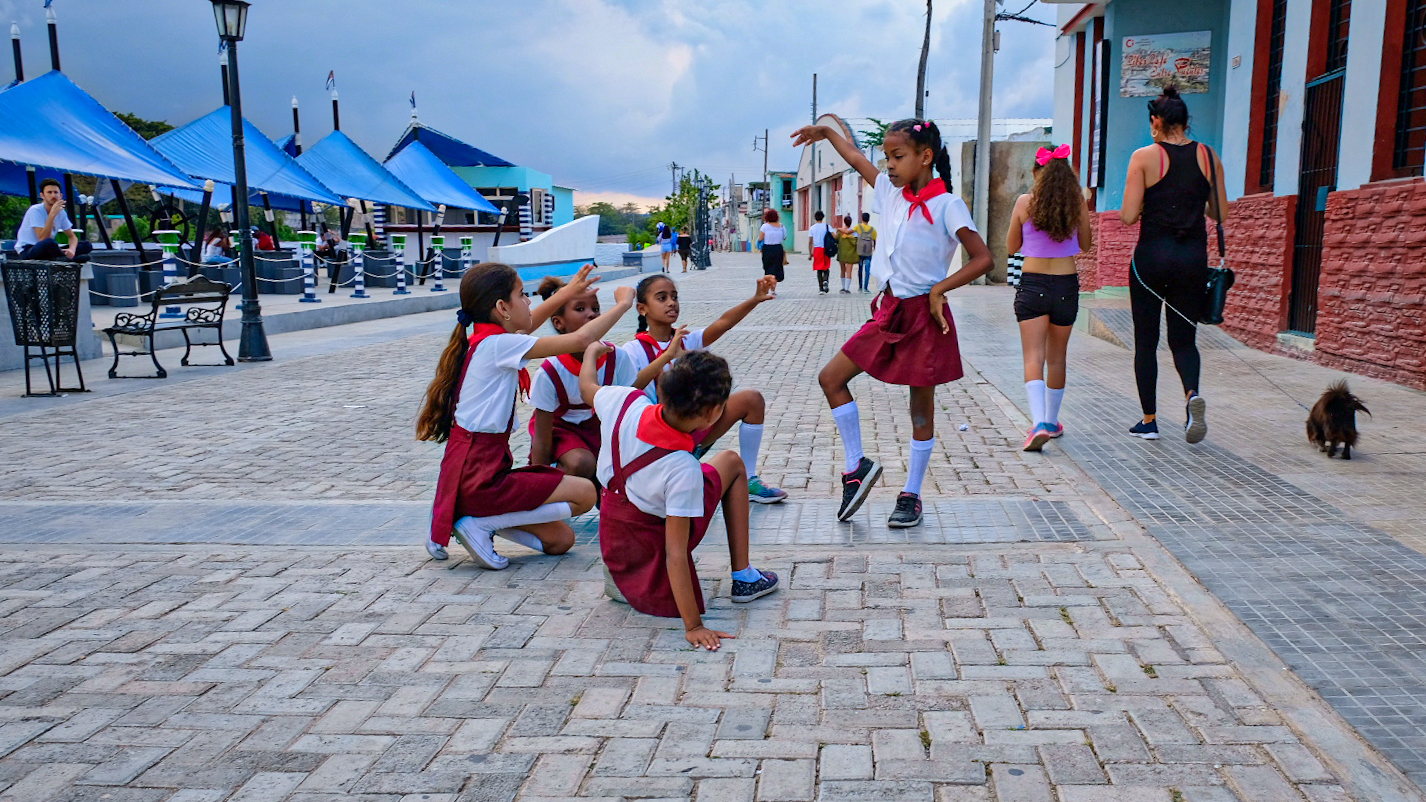
The flow of the night leads one way, past the blaring boombox of a dance troupe rehearsing in perfect synchronicity in front of the mirror of a closed shop’s window; onwards to Parque Marti where—in the biggest city, in the tiniest village—the heart of Cuba beats its syncopated rhythm.
Bunched in tight bouquets on cast-iron park benches, faces lit by the glowing hearth of a communal phone, families yell at Miami as though the distance to their relatives were physical rather than digital. Choir-singing drifts on the wind while children—uncannily bored by screens—run loose and wild. Oblivious to the whereabouts of their parents. Two sisters, a pair of roller-skates split between four feet. A cluster of boys, a rolled-up sock baseball thrown arm-over-shoulder and batted out of the park by the broken leg of a chair.
Creatively bored, and long may they remain so.
A culture which, despite all the hardships, is never without its layers and layers of colour and character. A people which, for all its fortitude and resilience, is never without its windows onto the humanity and warmth dwelling there, just beneath the surface.
Children play on well into the night even as we finally find our beds after another long day on earth. We breathe a deep sigh.
Cuba is at its best after hours.

Brazilian Telenovelas
‘Shhh! Sube el volumen Papi.’ – ‘Shhh! Raise the volume Papi.’
The last supper. It’s New Year’s Eve, and we’re eating dinner with our adoptive Casa Particular family in Cienfuegos. Relatives arriving and leaving at odd times, food laid out before us in formidable quantities, the traditional roast pig growing cold even as the heated debate rages on over whether or not to wait for el abuelo or la tía who seem to be exceeding even the Cuban sense of puntualidad.
Ceci and I are sitting across from the grandparents who are an absolute olden times riot. Who are unknowingly offering us one of the most culturally rich moments of the trip. Between jokes and jabs at one another, which hold us in a perpetual state of chuckles, we were given a tenderly authentic plunge into a papier-mâché of Pre-Revolution Era glamour, intermixed with Revolution Era struggle and Special Period dire straits, and through it all: a marriage story. Outrageous tales become too muddled by the sheer speed at which they’re being churned out between mouthfuls of food, for us to parse heads from tails.
How once, on a romantic date before the revolution, the grandfather ordered an expensive cake in a restaurant, and how when it arrived they turned off the lights making a huge ceremony of it. The expectation, you see, had made him lean in exactly when, to his surprise, they lit the cake on fire—which was presumably covered in rum?—burning his eyebrows clean off. How every respectable lady in Cuba, after the revolution, carries a Jabita with her at all times. The grand-mother proudly fishes a folded plastic bag, or Jabita, from her purse to prove it to us.
‘Pa las sobras,’ she says with a smile. For the left-overs.
All things being one when the Tv’s on, not even the grand-parents inestimable stories can be spared the time of day against the precedence of a Brazilian Telenovela. As soon as 10pm hits, the 30cm³ picture-box comes to life, the sacrosanct Soap-opera comes on, the music is turned off, and the conversation quietens to a murmur.
‘I love the interrogation scenes,’ whispers our host, ‘this man has managed to escape justice until now but I can’t see how he’ll escape this time. After all, he killed his wife, drugged her and on her birthday of all occasions.’
‘No no no,’ interjects their daughter, ‘he didn’t know she was allergic to shrimp, besides why would he kill her, her father is the one with the money and he could never hope to inherit without her.’
‘Shhhh. Raise the volume, would you?’
When the show is over, the table is cleared and we play a version of Ladron y Policia where the Thief—who’s really an assassin—kills people with a wink, while the Police Officer has to identify him before every one is dead. But in their indomitable goofiness, the two grand-parents never really grasp the rules of the game, and instead of leaning, find it infinitely more funny to focus on finding fresh new ways to sabotage the game. With the most difficult cycling day of the whole trip awaiting us at 6am the next morning, we finally say good-night at 11:30pm, and head to bed. At once exhausted and energized, but above all grateful for our host’s unbelievable hospitality.

New Years Day
A few days back we were forced to drink tap water. Push came to shove and there was nothing to be found but a long glass of pineapple juice at a street side kiosk. Ceci was the first to fall sick and she did so in spectacular fashion. Cat naps on the side of the highway, impromptu pit stops in sugarcane fields and all this on our longest day (kilometre-wise) of the trip. Last night we ended up sleeping in another ‘Motel’ don’t ask me how. But this one was more officially a room for rent, cleaner and the owner didn’t smile or say the word half-hour. Not once. We landed in an off-the-tourist-map industrial city without charm called Guines and found ourselves without any other option. Okay? Don’t ask about it. The room was nice and clean and if it weren’t for the strategic mirror placements, there is no way we would ever have even known.
Moving on. Ceci woke us up with a fart and ran to the bathroom. Laugh if you want. If it hasn’t ever happened to you, your nose is probably made of wood and about a mile long. Anyway, being only a few days away from the same, myself, I was in no position to opine. My own version of this story was on our day with the most uphill of the whole trip. And in both our cases, we weren’t able to eat anything the whole day. Nor the day after. Just pure muscle cannibalisation.
Welcome 2020.
Guantánamo
In every trip we have a day that goes catastrophically wrong. We started the day in a casa particular in Santiago de Cuba. Milena our host for the last 3 nights was an absolute sweetheart. On our first day off we renewed Ceci’s visa, a process that had us running around like turkeys without necks since Ceci showed up in shorts and you most emphatically—apparently—cannot show up in shorts to an immigration office in Cuba. I booked it back to our hotel, which was many kilometres away, to get Ceci a pair of long johns. The office was 45 minutes away from closing for the weekend—as seems to always be our luck with immigration offices—and it took all I had to return in the nick of time. Only to have Ceci tell me that someone lent her a skirt. Which is fine somehow for being a dress. Dresses fitting squarely in the domain of adequate visa renewal apparel. Somehow…
Visa renewed, we spent the day and a half exploring the fascinating streets of Cuba’s second largest city. We got into a bit of hot water with Milena since we collectively forgot to sign the registry upon arriving and when the immigration called, only the fact that her husband works in immigration got them out of a tight pickle.
After a substantial breakfast, we cycled out of Santiago de Cuba, recharged and ready for whatever life threw our way. Or… if not ready, at least, slightly more at peace with the trouble-child nature of our trip so far. About 20kms into the day, Ceci lost one of her sandals (her only non-cycling footwear). I cycled back about 20kms total but never found it.
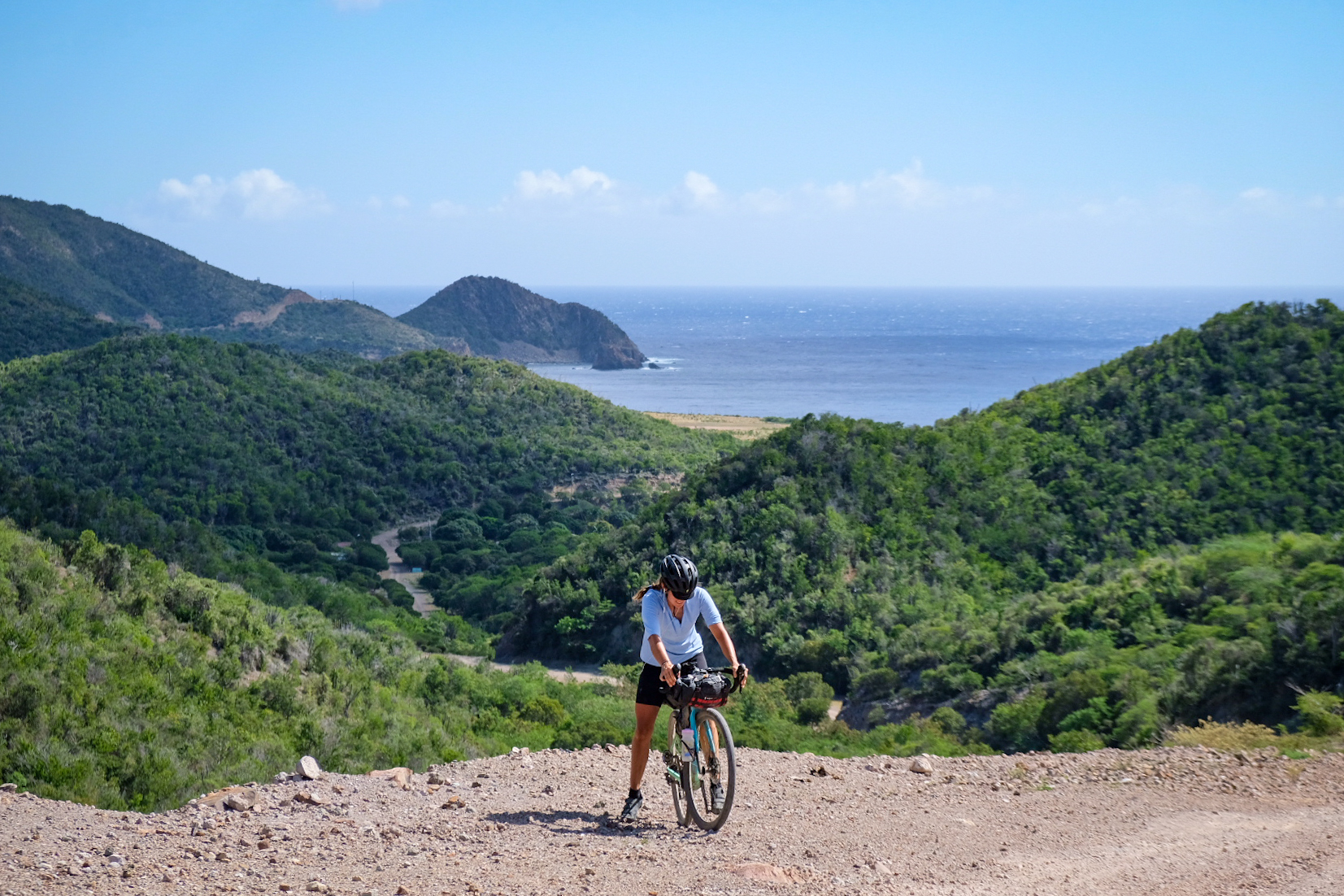
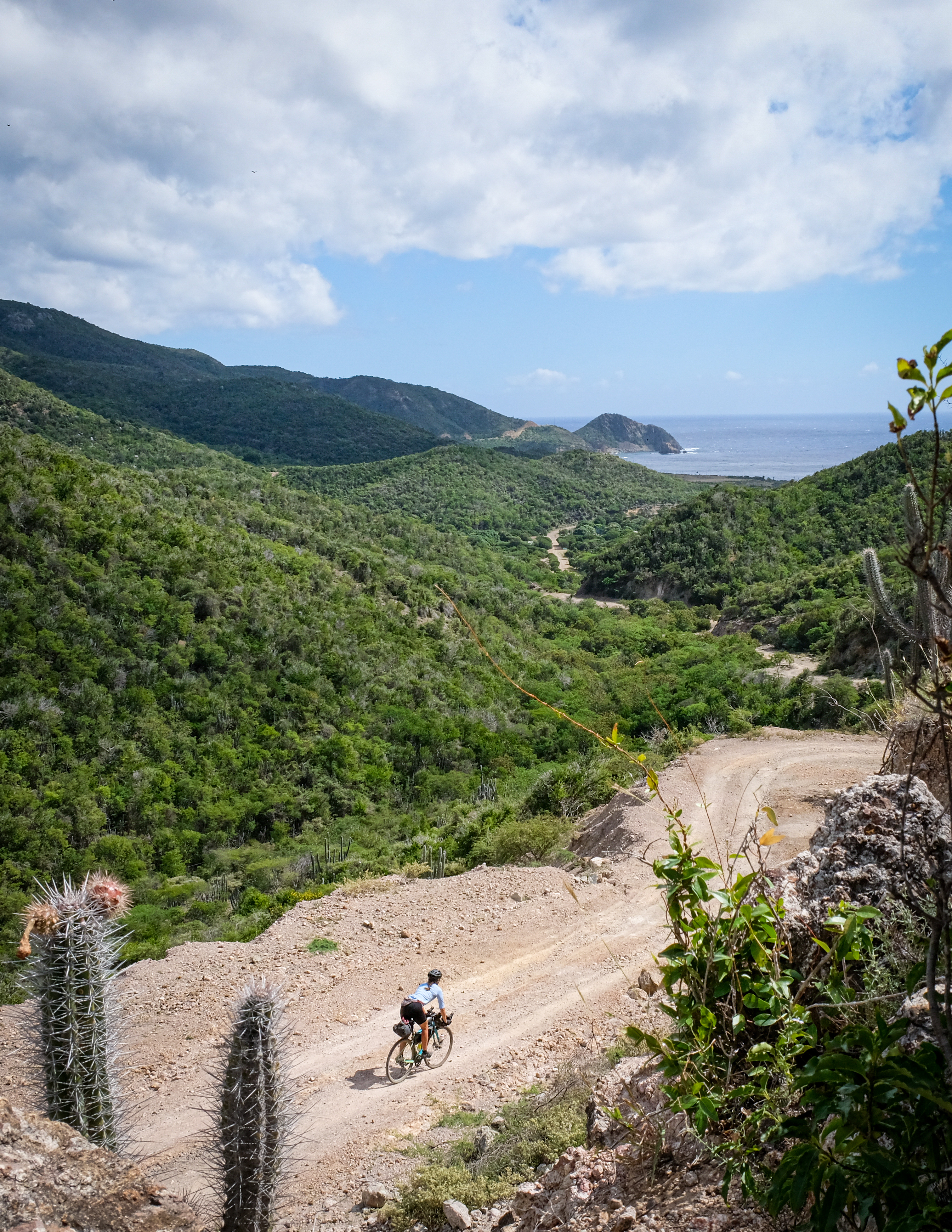
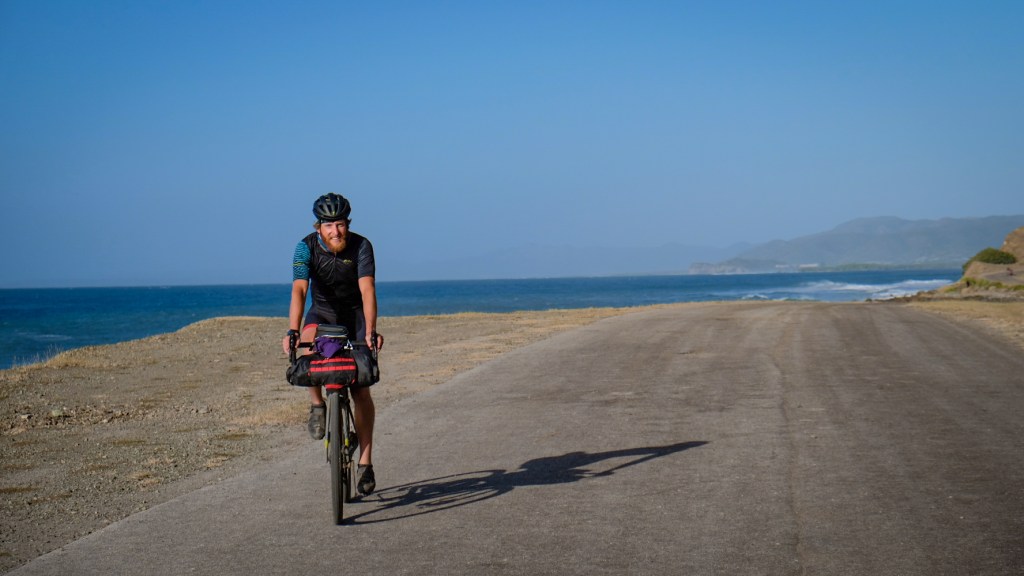
Sixty kilometres into our gorgeous day by the sea, we set off on a destroyed road with many river crossings and steep hills of loose rocks and sand. We took our time and savoured the breath-taking views, cycling back and forth to frame some photographs just right, with the mountains and the sea stretching along the horizon. The heat of the day was full upon us and the loose and steep uphill were quite a bit more than our tires could handle. Nonetheless, we pushed on towards a small community of beach huts. The only two people we glimpsed in the whole village hid from us when we passed and so, we pushed on. Ninety kilometres into the day, the road conditions bettered somewhat as we near the intersection that would lead us away from the coast towards the town of Guantánamo City. Not to be confused with the Guantánamo US military base which was clearly marked on the map as being about 50 kilometres away.
We cycled up a steep hill and were relieved to find that the road was starting to be paved, juuuust on the other side of a gate that categorically blocked off our access.
Zona Militar. We were about 30kms from our destination, about 2.5kms away from the fork in the road that led us away from the base; we hadn’t eaten a thing since breakfast, were completely out of water and about to suffer an hour’s worth of extensive interrogation by 3 armed soldiers. Who, it must be noted, refused to give us water since if we got sick it would be their fault. Unlike, say, if we died from dehydration. Interesting concept.
As the soldiers interrogated us, checking the photos on our camera, rummaging through our stuff, asking us if we talked to anyone in the nearby village, we slowly put together the missing pieces of the puzzle. Around the US military base stretches in a huge oversized perimeter: the Cuban military base. The secret Cuban military base. Still, us being us, we held onto the slightest hope that we might charm our way through for the last 2.5kms or be escorted there or something. Nope. The only way through was back the way we came, for 70kms to the outskirts of Santiago de Cuba, plus 85kms more on a completely different road.
And having seen nothing since the outskirts of Santiago de Cuba, starved, dehydrated and demoralised, we set our sights on undoing all the progress we’d made on the ridiculously rugged road. About 10kms up the road again, a kid stole Ceci’s other sandal off her bike and ran away. We decided not to give chase and gave Ceci’s sandals up for lost. It was just that kind of day… About 10kms later, we found a sign that read Club Amigo Los Corales and headed down the narrow dirt road to beg for alms. What we stumbled into was a parallel universe of drunk, sunburned and mildly annoyed tourists. Like… stumbling on a oasis in the middle of the desert and finding a luxury yacht parked in the middle of it. A mirage? Had to be… We couldn’t believe our eyes.
We chatted with some of the staff who quickly hatched a plan to let us eat lunch at the buffet provided we paid Juanito one of the cooks under the table. The word quickly reached all of the staff and many a blind eye was turned on our account as we proceeded to systematically eat ourselves into a food coma. A buffet? Are you joking? We lost our minds. While the staff smiled at us, happy to see someone relishing the delicious dishes, offering extra servings. All this time in Cuba scavenging for food, while here was a freaking buffet that most guests only picked at with mild disdain, favouring instead the open bar. All this time in Cuba, witnessing the lines for, well, everything; the shortages, the privations… And here? Grotesque abundance, obesity, complaints about the lack of non-Cuban dishes. Or as Ceci has it in her trip journal: ‘Musica Caribeña, mojitos y señores gorditos sin playeras.’ And the only smiles to be had were from the staff.
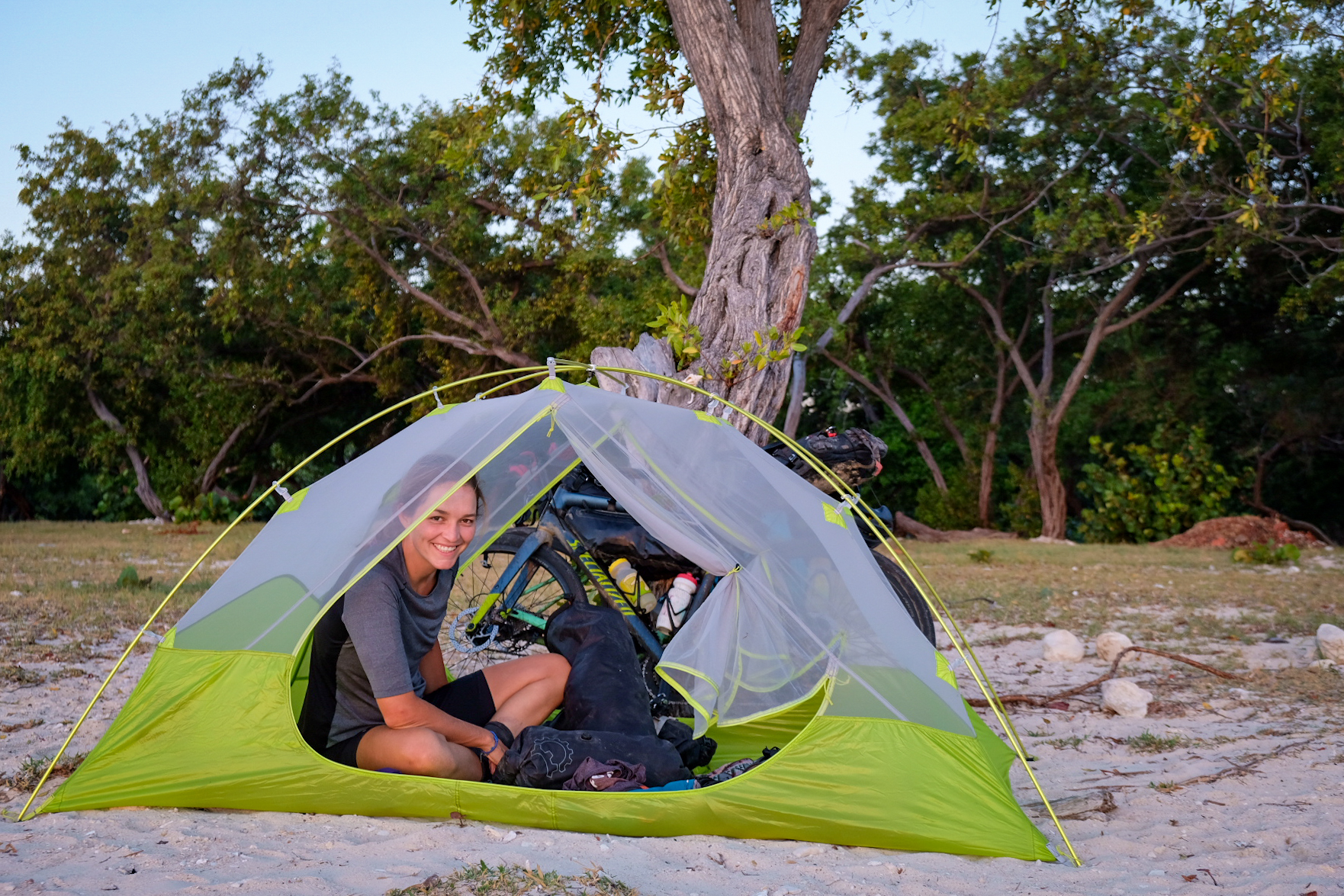
The dissonance between these two worlds made us lose our minds a bit more. Made me ashamed for my own compatriots. Between lunch and dinner, we went for a swim in the ocean. Alone. The patrons of the resort preferring the pools and jacuzzis for the ease of access to all the excesses on offer. We set up camp on the beach, lied down to read our books and by dinner time, we were the first in line for a table.
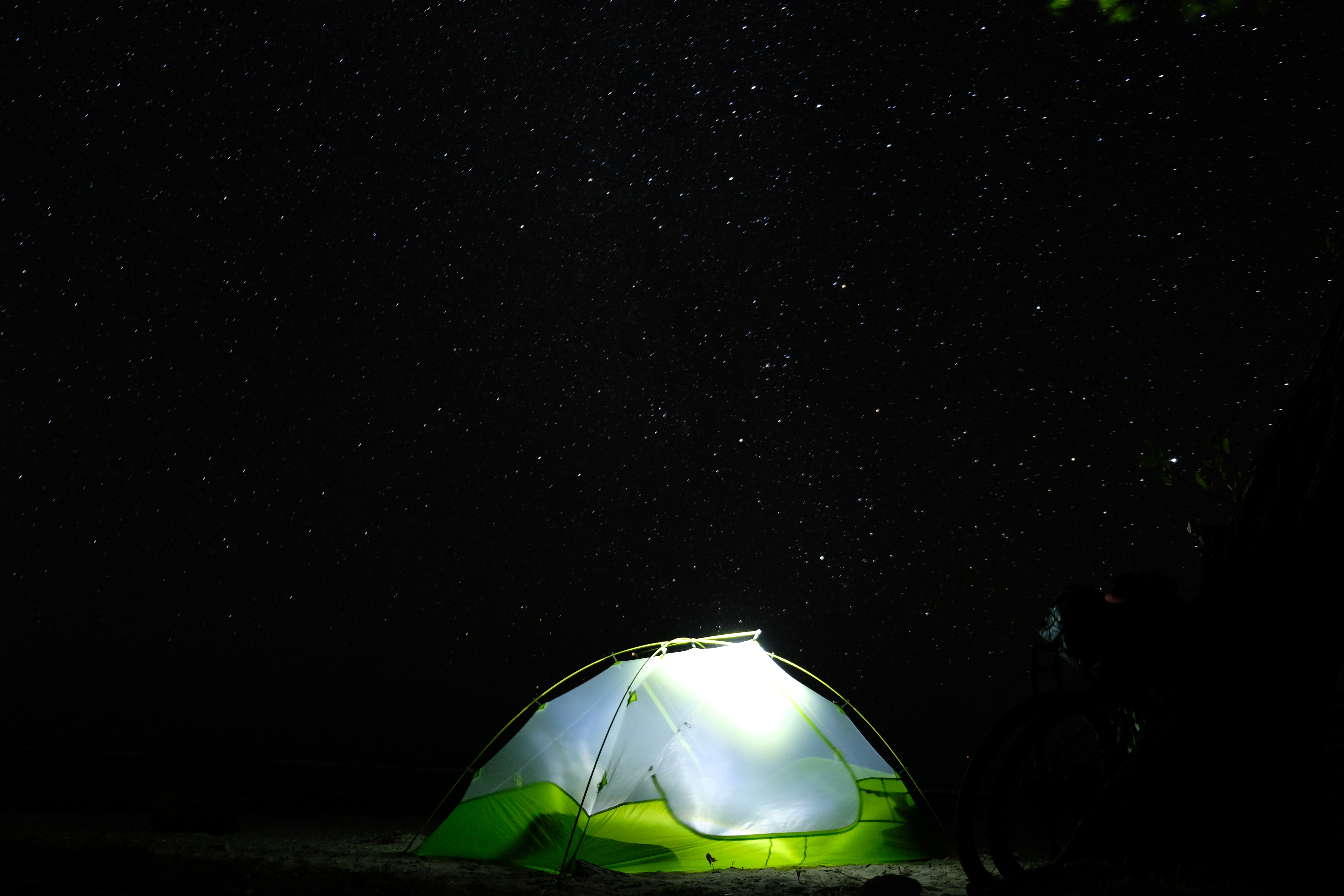
The only thing I remember eating for dinner was ice cream. I ate ice cream like nothing they’d ever seen. It didn’t take much to fill our shrunken stomachs, which is 100% okay since ice cream goes to the heart. Not the stomach. We slid our fare to Juanito and slipped out of the restaurant and out of the bounds of the resort where a sea of stars awaited us. We slid the roof off our tent and fell asleep counting stars. Completely and utterly confused as to how the world works.
Did we almost die?
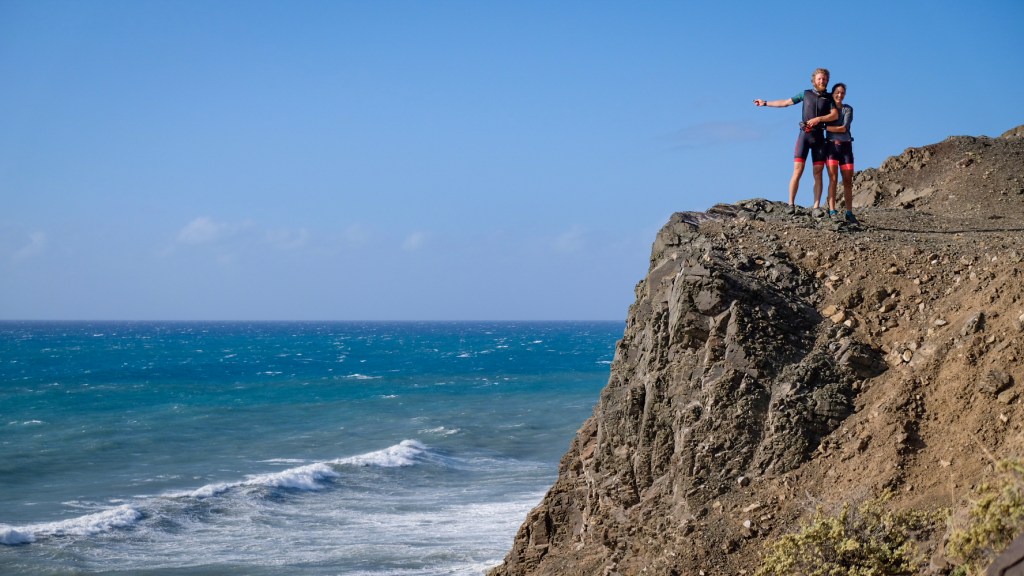
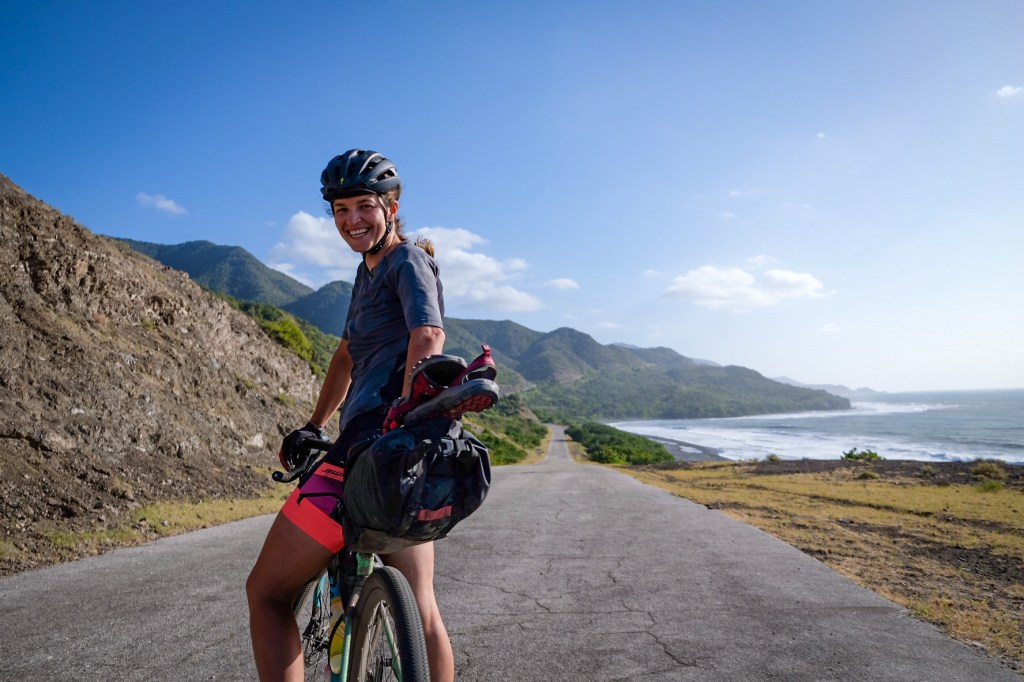
The cycling day of a lifetime awaits those who travel on the coast line highway between Marea Del Portillo and Santiago de Cuba. Not to mention a mighty mother of all tailwinds… when ridden from East to West. Which is to say headwind, if like us you have a penchant for doing things backwards and want to learn the rough way about the relationship between aerodynamics & bike-packing.
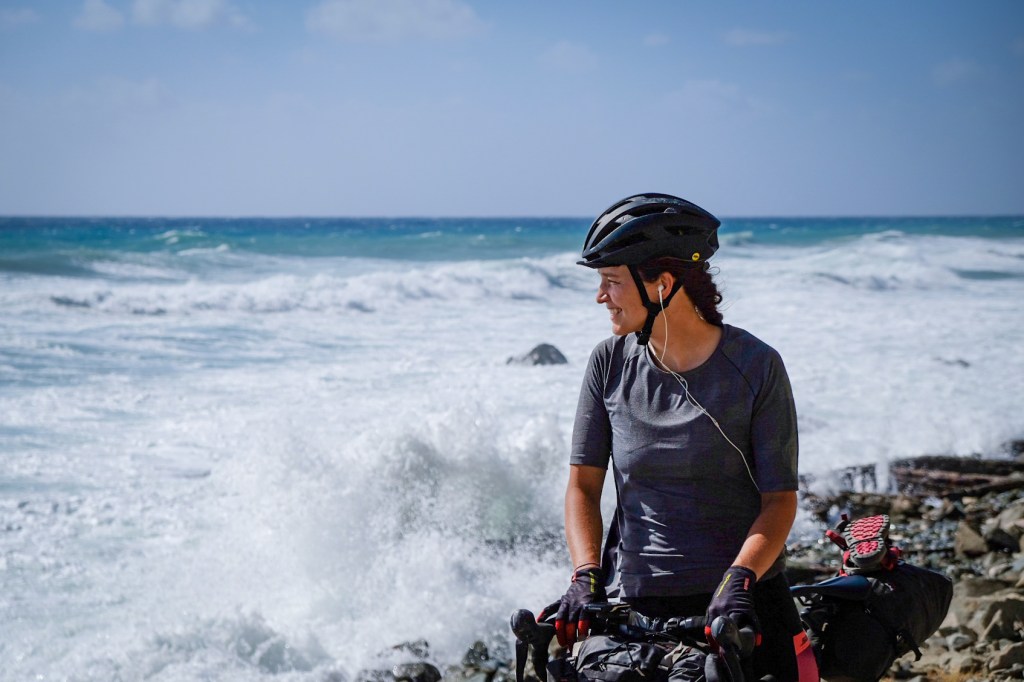
Sanguiched between the towering coastal mountains and a sweeping ocean view, the rubble of what was once a road snails its way as far as the eye can see. Over the years, the waves have reached-in and claimed much of the walls erected to protect the road, and are now greedily chomping at the edges of the road itself. If the roads of Cuba are already outrageously bad, when they say: ‘Se pone guapo por allí!’ – ‘It gets real pretty over yonder!’; you know you’re in for it!
In some places, there exists literally no land between the mountains & the sea. And that is precisely where we find ourselves at this moment. Waiting… Studying the sea… Seeing the roaring waves crash against a wall of sheer rock. Receding. Crashing. Receding. Catching short glimpses of the jumbled stones of a long ago unserviceable road. Waiting… Waiting for the right moment to…
‘Go!’
‘Qué?’
‘Now! Gooo!’
Ceci grabs her bike and runs, scampering like a crab on the loose wet rocks, in her cycling cleats, yelling a battle cry that is ½ courage and ¾ fear for her life. Five hundred meters down the disintegrated road, we reach a safe spot and glance back as a huge wave crashes with the cliff where we were just running for dear life a few seconds ago. The ground trembles with the impact. We glance at one other winded, wild-eyed and laughing.
Did we just almost die?
Well, it wouldn’t be the first time. Not even on this trip alone! Let’s see here, that time Ceci almost slid from a 1½-meter high dyke into 5m deep pool of swamp water, clipped into her weighed down bike; that time I collided into a bici-taxi that cut me off while I was checking my GPS going 30km\h… Oh yeah, and that time that horse with the beautiful white face almost kicked Ceci’s spine out of place, but I digress…
When in Cuba
In Cuba, people yell from midday to midnight. And then, from midnight to midday, as well.
In Cuba, everyone knows someone living in your country. In Cuba, lines are so long that window shopping is a legitimate shopping strategy. In Cuba, when your plane lands, you clap. And cheer. In Cuba, even though you reserve a Casa Particular, you’ll find yourself staying at an aunt’s place down the street. In Cuba, exact change is a myth. In Cuba, if you sit on a park bench, it’s open season. In Cuba, meaningful conversations are not always free. In Cuba, shorts can most emphatically not be worn to extend a Visa, but mini-skirts are a dress so that’s 100% fine. In Cuba, the cows you see everywhere apparently don’t produce milk, so they import it in powdered form. In Cuba, Spanish is spoken as though with a wet cigar perpetually in your mouth, making articulation or the pronunciation of consonants such as ‘s’ and ‘n’, virtually impossible.
Cuba sneaks the carpet from under your feet then replaces it with another. Sometimes it’s a better carpet, sometimes it’s much worse, sometimes you find yourself standing on the bare cobblestone being told that there is, in fact, a carpet under your feet, sometimes there are no carpets to be found in all of Cuba. But mostly, you wobble a bit, shaken by the sudden change underfoot and readjust to whatever the reality has revealed itself to be.
From beginning to end, Cuba sneaks the carpet. From day one when we couldn’t bring our bikes to our 3rd story hostel and had to leave them at the owner’s grandmother’s place down the street, squeezed between her fridge and her bed; to day 93 when, after crossing Cuban customs, we got excited about buying some treats with the rest of our Cuban Convertible Pesos, and were told that CCPs are not accepted this side of customs.
From the first moment to the last, when you’re in Cuba, you’re in Cuba. Indubitably.
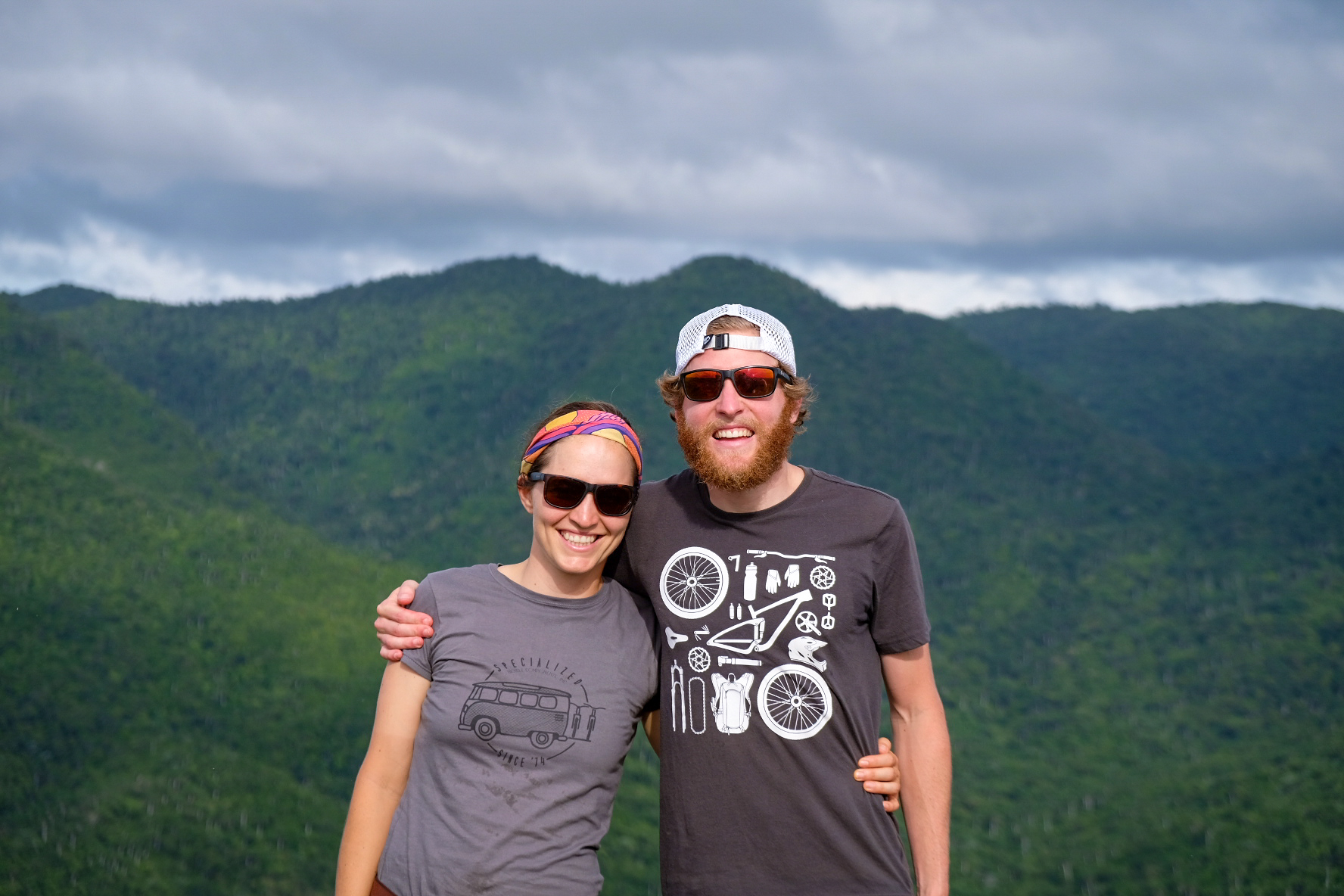
A huge heartfelt thanks to everyone who made this trip possible. This trip was our version of a “Ceci & Etienne Honeymoon” and, as such, was financed by our family & friend’s wedding gifts. We hope you share our belief that it was money well spent!
If we survived our Honeymoon, “Till-Death-Do-Us-Part” should be a breeze!
Until next time!
 LifeAthlon